



What Are The Best Materials for Exterior Doors?
The best materials for exterior doors are aluminum, steel, and stainless steel when the project calls for a durable metal entrance. Aluminum is strong against corrosion and flexible in design. Steel offers high rigidity and security potential. Stainless steel combines structural strength with better corrosion resistance. The right choice depends on climate, exposure, door size, security, maintenance, and architectural style.
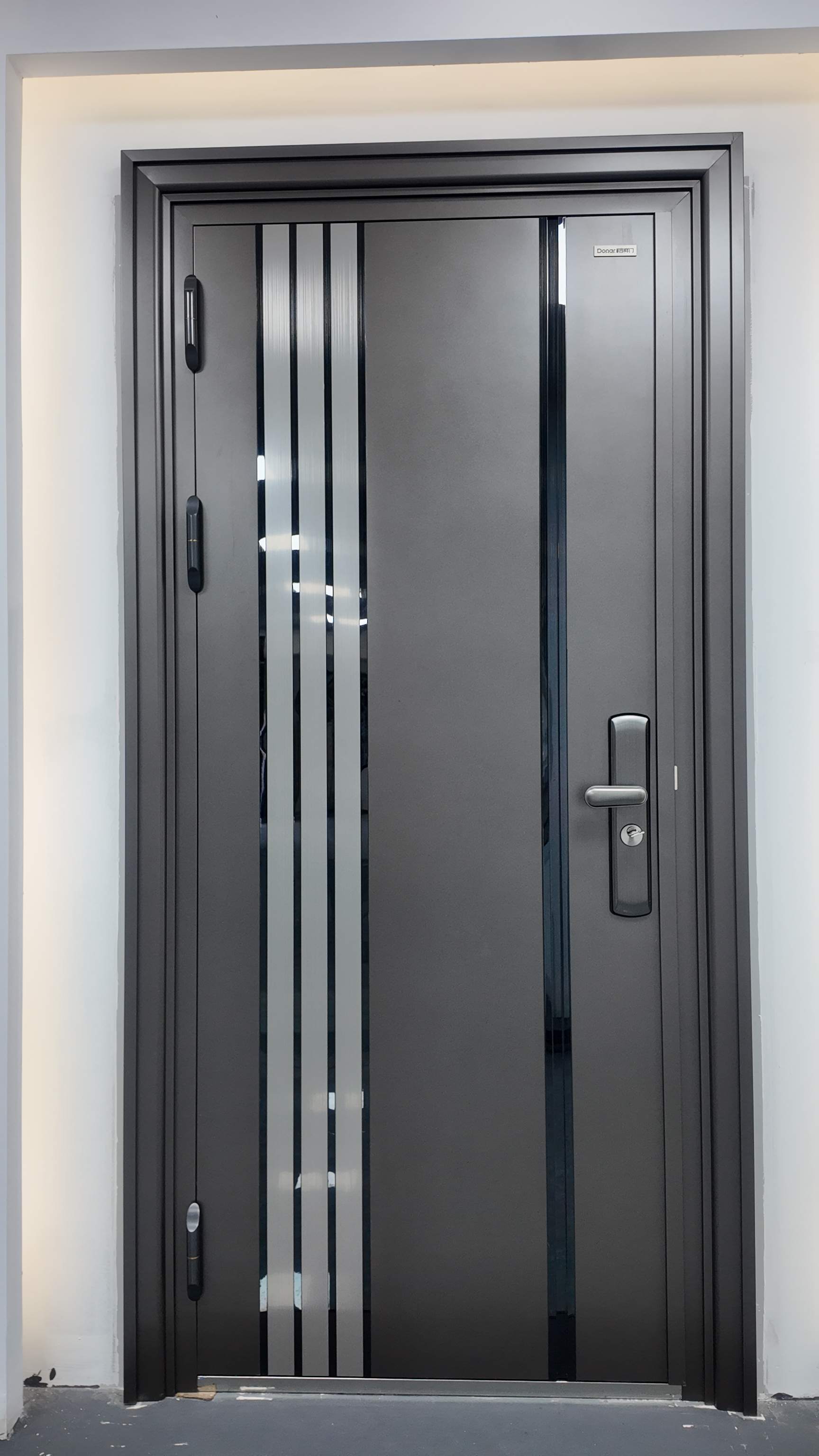
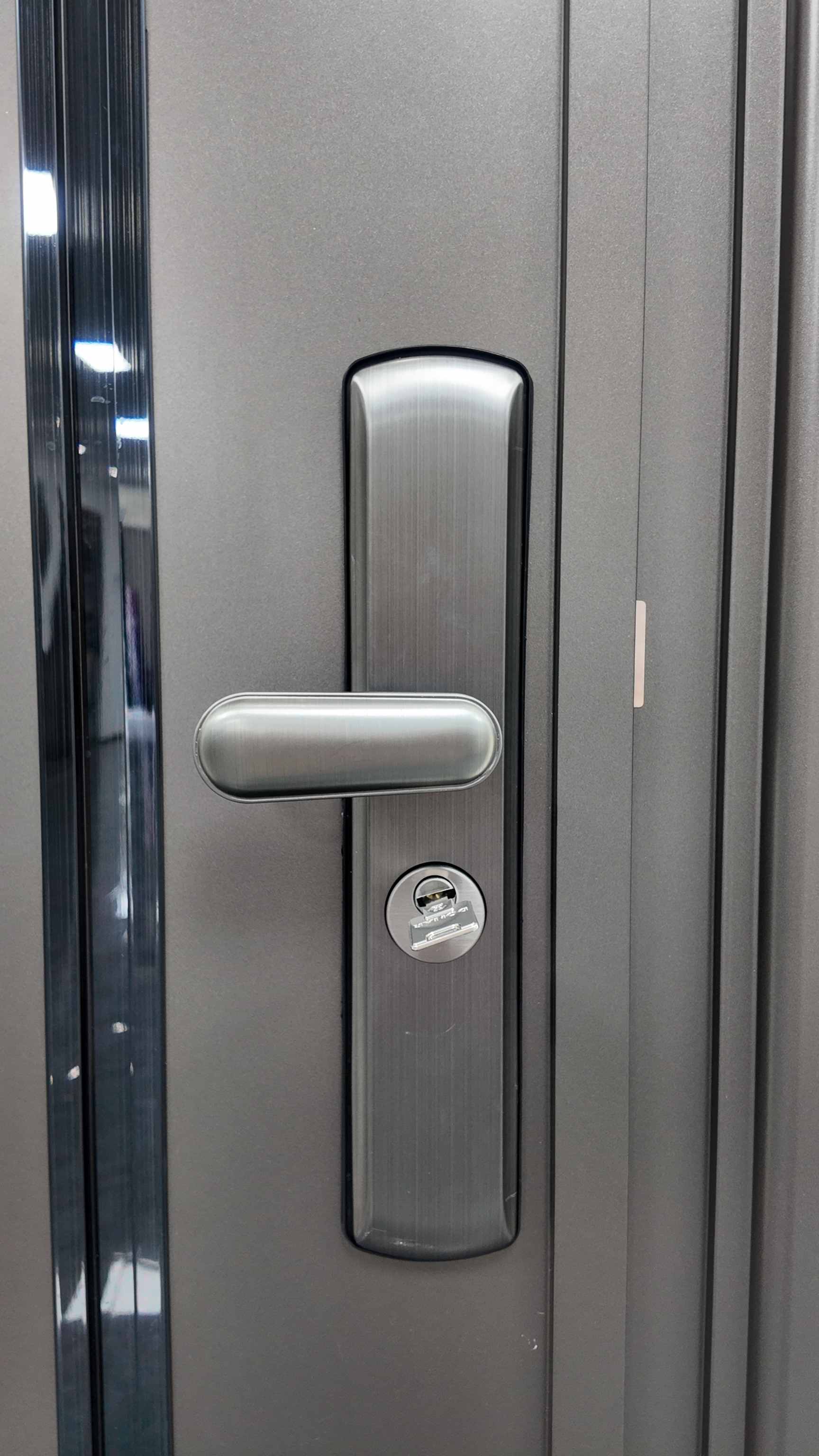
Table of Contents
- Aluminum for Humid and Contemporary Projects
- Steel When Rigidity Comes First
- Stainless Steel for Strength and Corrosion Resistance
- Steel-and-Aluminum Armored Structures
- What About Wood and Fiberglass?
- Match the Material to the Exposure
- Look Beyond the Door Skin
- Our Metal Door Manufacturing Experience
- Get a Material-Based Door Recommendation
Aluminum for Humid and Contemporary Projects
Aluminum naturally forms a protective oxide layer, so it does not develop red rust like untreated carbon steel. This makes it a practical material for humid climates, coastal areas, villas, and entrances with limited weather protection.
It is also well suited to modern design. Large panels, narrow lines, concealed hardware, metallic finishes, and double-door arrangements can be produced without making the entrance look visually heavy.
Our aluminum front doors use high-strength aluminum structures in a range of residential and security-focused designs. Selected models combine aluminum profiles and precision panels with a stainless steel inner lining for added structural support.
Aluminum still needs correct detailing. The threshold, frame joints, seals, hardware, and installation determine how the complete entrance handles rain and wind.
Steel When Rigidity Comes First
Steel is widely used for Security Doors because it can provide a strong, rigid structure. It works well for residential entrances, apartment doors, and other locations where resistance to impact and forced entry carries significant weight.
The outer sheet alone does not define a good steel door. A reliable structure also needs a stable frame, reinforced lock area, appropriate hinges, internal support, and controlled gaps around the leaf.
Surface protection is important. Steel used outdoors needs a suitable coating and proper care if the surface is damaged. Coastal and constantly wet environments require more attention than dry, sheltered entrances.
Steel offers considerable design freedom through painted finishes, carved panels, composite aluminum panels, and decorative metal details.
Stainless Steel for Strength and Corrosion Resistance
Stainless steel is often selected where the entrance needs a strong metal structure with better resistance to corrosion. Grade, surface treatment, fabrication quality, and exposure all affect the result.
One of our stainless steel security doors uses 304 stainless steel, a 90 mm door leaf, a stainless steel hinge, and a multi-point stainless steel lock body. Colors, decorative panels, and frame structures can be changed to match the project.
Stainless steel suits humid regions, residences, apartment entrances, and security-focused projects. It can retain a direct metal appearance or receive other surface finishes.
Steel-and-Aluminum Armored Structures
Some high-end doors combine steel and aluminum instead of relying on one material throughout.
The steel portion provides the reinforced core and frame strength. Aluminum panels add depth, carved detail, and a refined exterior finish. Stainless steel may be used on the rear panel, hinges, or lock components.
Our Light Luxury Armored Doors use this approach for villas and upscale residences. Selected designs use precision-carved aluminum front panels in 4 mm, 6 mm, or 8 mm options, together with a 90 mm door leaf and stainless steel locking hardware.
This construction is suitable when the entrance must look substantial without sacrificing the finer panel work expected on a luxury façade.
What About Wood and Fiberglass?
Wood brings natural warmth and can suit traditional architecture, but exterior performance depends greatly on the timber, construction, coating, shelter, and ongoing refinishing. Poorly protected wood can move or weather under moisture and sunlight.
Fiberglass is used in some markets because it can imitate wood while requiring less maintenance. Its strength, internal reinforcement, surface quality, and available sizes vary by product.
Our manufacturing is focused on aluminum, steel, stainless steel, and armored metal entrance doors. We therefore recommend these materials when the project requires custom metal construction, security reinforcement, large sizes, or coordinated exterior finishes.
Match the Material to the Exposure
A door beneath a deep porch has an easier life than a door facing direct rain and afternoon sun. The same material can perform differently in these two positions.
Before deciding, look at:
Distance from the coast
Rain direction
Humidity
Sun exposure
Temperature changes
Canopy depth
Door size
Opening frequency
Security level
Maintenance access
For coastal or humid locations, aluminum or stainless steel is often the easier starting point. For a sheltered entrance where rigidity and anti-pry construction dominate, reinforced steel may offer strong value. For a luxury villa entrance, a steel-and-aluminum armored structure can combine security with a deeper decorative finish.
Look Beyond the Door Skin
Material comparisons often focus only on the visible panel. The frame, hinge support, lock area, filling, threshold, and seals are just as important.
A premium surface cannot correct a weak frame. A thick leaf will not operate properly if the hinges are underspecified. A weather-resistant metal cannot prevent leakage if the threshold and seals do not suit the exposure.
The best exterior door material is therefore the one used within a well-matched system.
Our Metal Door Manufacturing Experience
We began producing entrance doors in 1979 and have continued developing aluminum, steel, stainless steel, and non-standard armored entrances. More than 300 employees support our manufacturing operations, while automated equipment and ERP management connect planning, production, logistics, and warehousing.
As a reliable export supplier of metal exterior doors, we support custom sizes, panel designs, frame structures, colors, locks, handles, glass, and opening methods for residential and project orders.
Get a Material-Based Door Recommendation
Tell us where the door will be installed, how exposed it is to rain or coastal air, the required size, preferred appearance, security needs, and order quantity. Click here to obtain a customized quotation, and we will help compare aluminum, steel, stainless steel, and armored entrance door structures.