



What'S The Best Material for A Custom Front Door?
The best material for a custom front door depends on the required structure, dimensions, security level, architectural style, environmental exposure, and manufacturing process. Steel, stainless steel, and aluminum are practical choices for many customized entrance projects.
Table of Contents
- Why Does Material Selection Matter More for custom front doors?
- Which Materials Are Suitable for Custom Front Door Manufacturing?
- How Should Buyers Match Materials with Custom Door Designs?
- What Customization Options Should a Front Door Manufacturer Provide?
- How Can Buyers Confirm the Quality of a Custom Front Door?
- Why Work with DONAR for Custom Entrance Door Projects?
- Start Your Custom Front Door Project with DONAR
Why Does Material Selection Matter More for custom front doors?
A standard entrance door is usually manufactured around established dimensions and configurations. A custom front door may require different dimensions, decorative panels, frame structures, opening directions, and hardware arrangements.
These requirements influence which materials can be processed efficiently and how the complete door should be constructed.
For manufacturers and B2B buyers, the material should therefore be selected according to the complete design rather than appearance alone.
For example, a door with a large decorative aluminum panel may require a different supporting structure from a conventional steel security door.
The key is to balance structural requirements with the visual design and manufacturing feasibility.
Which Materials Are Suitable for Custom Front Door Manufacturing?
Several materials are commonly used in customized entrance door production.
1. Steel: Suitable for Reinforced Custom Entrance Doors
Steel is a practical material for projects that prioritize structural rigidity and security-oriented construction.
It supports different manufacturing processes, including laser cutting, bending, welding, and surface finishing.
For customized entrance doors, steel offers several advantages:
Reinforced internal structures.
Flexible door leaf configurations.
Compatibility with different locking systems.
Support for decorative metal panels.
Multiple surface colors and textures.
Steel is particularly suitable for residential Security Doors, villa entrances, and housing development projects.
However, surface protection must be considered carefully, especially in humid or coastal environments.
2. Stainless Steel: Suitable for Corrosion-Resistant Entrance Systems
Stainless steel is commonly selected for entrance doors requiring a durable metal surface and improved corrosion resistance.
Grade selection is important because different stainless steel grades have different corrosion characteristics.
304 stainless steel is frequently used in residential entrance door manufacturing.
Its advantages include:
Good corrosion resistance in many environments.
Strong metal construction.
Compatibility with decorative surface treatments.
Support for customized panels and frames.
Suitability for modern and security-focused entrances.
For projects exposed to salt air or particularly aggressive environments, buyers should evaluate the required stainless steel grade and the complete product specification rather than assuming every stainless steel door offers the same corrosion protection.
DONAR's Stainless Steel Security Door uses 304 stainless steel, a 90 mm door leaf, and a customized frame configuration.
3. Aluminum: Suitable for Modern Architectural Designs
Aluminum offers a relatively lightweight metal construction and good natural corrosion resistance.
It is frequently used in modern architectural entrance systems where clean lines, decorative surfaces, and customized profiles are important.
Aluminum front doors can support:
Contemporary panel designs.
Metallic finishes.
Decorative carving.
Large-format entrance configurations.
Customized frame structures.
However, the strength of an aluminum door depends on its profile design, reinforcement, material thickness, and hardware connections.
For oversized or heavy door leaves, structural calculations and hinge capacity become particularly important.
Explore our Aluminum Front Door Collection for available designs.
4. Steel-Aluminum Composite: A Practical Customization Option
A composite structure can combine the characteristics of different materials within one entrance door.
For example, a steel structural base can provide support for the door leaf, frame, hinges, and locking system, while an aluminum exterior panel allows more flexibility in decorative processing.
This arrangement is particularly useful for premium residential entrances where both structural requirements and appearance matter.
DONAR's Champagne Gold German Style Home Entrance Door provides a real product example.
Its published specifications include:
| Component | Specification |
|---|---|
| Main Construction | Steel and Aluminum |
| Door Leaf Thickness | 90 mm |
| Front Panel | 2 mm, 4 mm, or 6 mm Precision-Carved Aluminum Plate |
| Back Panel | Non-Standard 1.0 mm |
| Internal Filling | Polyurethane Foam |
| Hinge | Concealed Stainless Steel Hinge |
| Lock Body | 40 × 600 mm Stainless Steel Large Lock Body |
| Customization | Decorative Panels, Colors, Frames, and Locks |
This configuration demonstrates how a custom door can use different materials for structural and decorative purposes.
See the Champagne Gold German Style Home Entrance Door for additional details.
How Should Buyers Match Materials with Custom Door Designs?
Different architectural designs create different manufacturing requirements.
| Custom Door Design | Suitable Material Direction | Main Design Considerations |
|---|---|---|
| Minimalist Entrance Door | Steel or Aluminum | Flat panels, clean lines, matte finishes |
| Luxury Villa Door | Steel-Aluminum Composite | Decorative panels and customized hardware |
| Security-Focused Door | Reinforced Steel or Stainless Steel | Internal structure, lock body, and hinge capacity |
| Modern Metallic Entrance | Aluminum or Stainless Steel | Surface finish and panel proportions |
| Large Double Entrance Door | Reinforced Metal Construction | Leaf weight, frame strength, and hardware |
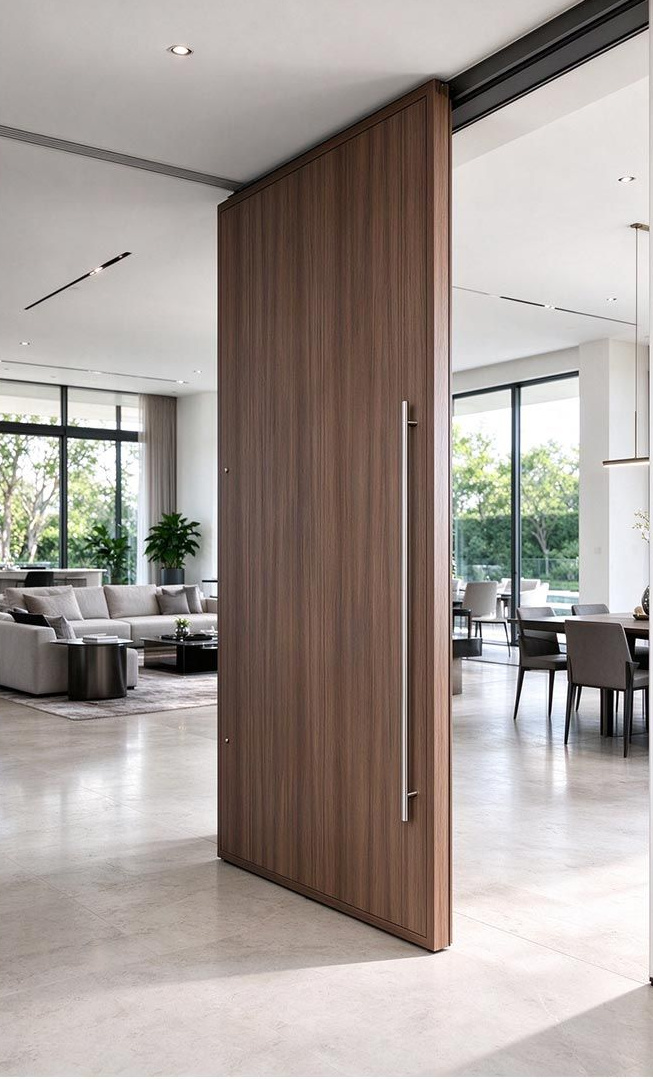
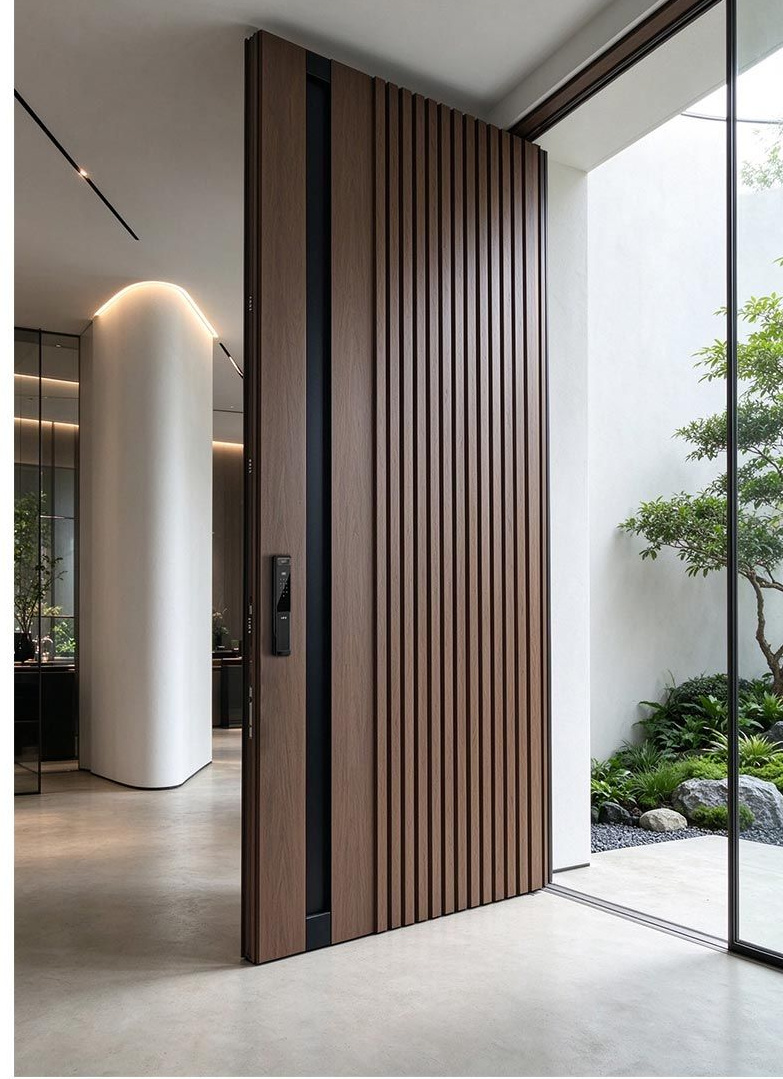
| Pivot Entrance Door | Engineered Metal Structure | Pivot position, load distribution, and floor clearance |
A common mistake in custom door projects is finalizing the decorative design before confirming the structural arrangement.
The door size, opening method, frame depth, hinge position, and locking system should be considered during the initial design stage.
What Customization Options Should a Front Door Manufacturer Provide?
A capable custom entrance door manufacturer should be able to discuss several aspects of product development.
1. Door Dimensions
Custom width, height, and door leaf thickness may be required for different building openings.
2. Door Frame Structures
Frame depth and profile configuration should match the wall construction and installation conditions.
3. Decorative Panels
Carved aluminum panels, metal strips, surface patterns, and other decorative components can create different architectural effects.
4. Colors and Surface Finishes
Metallic colors, matte finishes, brushed textures, and customized color combinations help distributors develop products for different markets.
5. Hardware and Locking Systems
Mechanical locks, fingerprint locks, password locks, handles, and hinge configurations should be selected according to the intended application.
6. Opening Direction
Inward-opening and outward-opening configurations should be confirmed before manufacturing.
For distributors developing private-label collections, branding and packaging requirements should also be discussed early.
How Can Buyers Confirm the Quality of a Custom Front Door?
Custom products require more careful sample approval because changes made during production can affect the complete structure.
Before mass production, buyers should confirm:
Technical drawings.
Actual door dimensions.
Material specifications.
Panel thickness.
Frame construction.
Welding and connection quality.
Surface finish samples.
Lock and hinge compatibility.
Opening direction.
Packaging arrangements.
A physical sample or approved production prototype provides a useful reference for subsequent batch inspection.
For oversized doors, it is also important to confirm the door weight and the load capacity of the selected hardware.
Why Work with DONAR for Custom Entrance Door Projects?
DONAR specializes in high-end non-standard customized entrance doors and has manufacturing experience dating back to 1979.
Our product range covers steel, stainless steel, aluminum, and armored entrance doors.
We support OEM/ODM cooperation for different purchasing requirements, including customized door dimensions, decorative panels, colors, frame structures, locks, and hardware configurations.
Our manufacturing system incorporates automated production equipment and ERP-based management to coordinate planning, production, and delivery.
For distributors and project buyers, this provides a basis for developing product collections around specific market requirements rather than relying entirely on standard models.
Learn more about DONAR's Manufacturing Capabilities.
Start Your Custom Front Door Project with DONAR
The right custom front door material should match the intended application, structural requirements, architectural design, and manufacturing capabilities.
DONAR works with importers, door distributors, contractors, and residential developers to develop customized entrance door solutions.
Share your drawings, reference images, material preferences, and estimated quantities through our Product Inquiry Page to discuss your custom front door requirements.