



How To Paint Steel Door?
A steel door can keep a project looking solid and professional for years, but only if the surface treatment is handled the right way. Many buyers search how to paint steel door because they are not only thinking about appearance. They are also thinking about finish adhesion, weather resistance, color consistency, and how the door will perform after transport, installation, and long-term use.
That is especially true in projects that involve villas, residential communities, commercial entrances, and bulk procurement. A painted surface is often the first thing end users notice, but for importers, contractors, and distributors, the bigger issue is whether that finish stays stable across batch orders. In many cases, repainting is not simply a decorative step. It is closely tied to corrosion control, product positioning, and after-sales risk.
Our main entrance steel door is made for this kind of demand. It is built with a steel structure, an outward-opening design, a 95 mm door leaf, interlocking anti-pry steel, and a lock and hinge system designed for stronger entrance performance. It also supports custom colors, decorative panels, lock options, frame structure changes, and OEM or ODM cooperation. That makes the discussion about painting more practical, because the finish is not separate from the product. It is part of the full entrance solution.
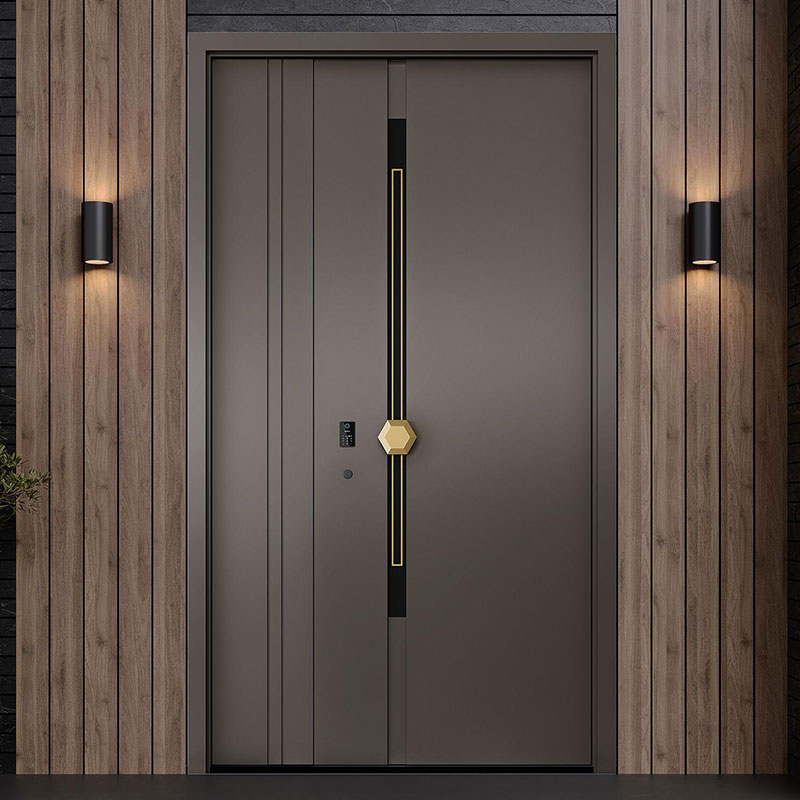
Table of Contents
- Why Paint Quality Matters On A Steel Door
- Surface Preparation Comes Before Color
- Primer And Topcoat Need To Work Together
- Painting And Security Should Not Be Separated
- How This Relates To Industrial Steel Doors
- What B2B Buyers Usually Worry About
- Choosing A Supplier Instead Of Only Choosing A Color
- Conclusion
Why Paint Quality Matters On A Steel Door
Painting a steel door is not the same as refreshing a simple indoor panel. A main entrance door faces sunlight, moisture, temperature change, daily handling, and repeated cleaning. If the coating system is weak, buyers start seeing scratches, fading, peeling, edge wear, or color inconsistency much earlier than expected.
This is one reason professional buyers pay close attention to coating quality during sourcing. In sample review, a door may look attractive under showroom lighting. But in real projects, the surface has to survive packing, loading, unloading, site installation, and daily use. A finish that fails too early can damage the value of the whole product line, especially when the door is positioned for premium housing or commercial frontage.
For this reason, learning how to paint steel door properly starts with understanding that paint is not only about color. It is about preparation, coating compatibility, and the relationship between the steel base and the final surface.
Surface Preparation Comes Before Color
The biggest mistake in steel door painting usually happens before any paint is applied. If the surface is not cleaned, leveled, and prepared correctly, even a premium coating will struggle to perform. Dust, oil, oxidation, and tiny surface defects can reduce adhesion and cause future peeling.
A reliable process begins with cleaning the steel thoroughly and making sure the door surface is dry and stable. Any residue from handling or production has to be removed first. After that, the surface needs proper treatment so the primer can bond well and create a stable base for the topcoat.
For buyers sourcing finished entrance doors, this is a key issue because poor preparation often stays hidden until after installation. That is why serious suppliers pay attention to preparation and not only to final color. In higher-value projects, surface stability matters more than short-term visual effect.
Primer And Topcoat Need To Work Together
When people ask how to paint steel door, they often focus on the final color. In practice, the primer layer is just as important as the visible finish. The primer supports adhesion, helps resist corrosion, and improves the uniformity of the topcoat. Without a suitable primer, the outer layer may look acceptable at first but lose performance over time.
The topcoat then adds the visual identity and the protective surface that buyers actually see. It should match the project style, but it also needs to suit the real use environment. A door used in humid regions, coastal markets, or high-traffic commercial spaces may need a more demanding finish strategy than a door used in a protected indoor area.
This is where a supplier’s customization ability becomes valuable. Our product supports custom color options, which helps buyers align door appearance with architectural style, developer preferences, and local market demand. That is especially useful in OEM and ODM programs where color consistency across different orders is part of the product promise.
Painting And Security Should Not Be Separated
A Steel Entrance Door is not only a decorative surface. It is also a security product. That means the painting process should work with the structure, not hide weaknesses in it. A heavy coating on a weak door does not create a better product. Buyers still need a strong internal build, reliable lock coordination, and a stable frame match.
Our main entrance steel door is designed around this kind of balance. It uses steel as the main structural material, includes interlocking anti-pry steel, and works with a stronger locking system and hinge arrangement. The filling material is aerospace-grade polyurethane, which also supports the solid feel of the door body. When the structure is dependable, the surface finish becomes more meaningful because it is protecting and presenting a product that already has real performance behind it.
This matters in premium residential and engineering projects. Buyers do not want to explain to customers why a door looks high-end in photos but feels average on site. The coating, hardware, thickness, and security details should all support one another.
How This Relates To Industrial Steel Doors
The phrase industrial steel doors often brings to mind utility spaces or purely functional buildings, but the same finish concerns apply across many categories. Whether the project is residential, mixed-use, or commercial, the market now expects steel doors to deliver both protection and a refined exterior.
That is why finish quality has become more important even outside heavy industrial applications. Buyers want steel doors that can carry a strong structure and still meet modern design expectations. In this sense, the painting logic used on industrial steel doors also helps buyers think more clearly about entrance doors: the surface must be durable, the coating system must be stable, and the final color must stay consistent from one order to the next.
For wholesalers and project suppliers, this is a real commercial issue. If one batch shows slight variation in tone, gloss, or texture, it can affect acceptance on site. Good appearance is no longer just a sales advantage. It is part of quality control.
What B2B Buyers Usually Worry About
Most B2B buyers do not only ask what color is available. They ask deeper questions. Can the finish stay stable in bulk orders? Will the paint hold up during shipping? Can custom color requests be matched consistently? Will the coating still look right after the lock, hinge, and frame are installed? If the product needs market-specific styling, can the supplier adjust without making production unstable?
These are practical concerns, and they are often the difference between a workable supply relationship and a risky one. In many projects, the problem is not that a supplier cannot make one good-looking sample. The problem is whether that supplier can keep the same finish quality through repeated production.
That is why customization must be backed by manufacturing control. Our entrance door program supports decorative panels, colors, frame structures, and lock options, while also offering OEM and ODM service for customers who need differentiated products for local markets. This makes the painted finish part of a coordinated product solution rather than a last-minute styling step.
Choosing A Supplier Instead Of Only Choosing A Color
For developers, importers, and private label buyers, painting is not an isolated process. It connects with door material, hardware layout, frame structure, package protection, and market positioning. A supplier that understands this can help reduce claims, improve finish consistency, and make custom programs easier to manage.
That is the real value behind a steel door supplier. The goal is not only to offer standard shades. It is to support a product that is easier to specify, easier to present, and more dependable after installation. When a supplier can combine structural reliability with flexible finish customization, buyers gain more control over both sales positioning and project execution.
Conclusion
So, how to paint steel door in a way that truly adds value? Start with proper surface preparation, use a primer and topcoat system that work together, and make sure the finish is matched to a door that already has strong structural quality. A painted surface should protect the door, strengthen product presentation, and support long-term use rather than only improve first impressions.
For buyers sourcing entrance solutions, the right painted steel door should combine finish stability, security performance, and customization flexibility in one package. Our product is built for that kind of demand, with steel construction, a thicker door leaf, anti-pry design, custom finish options, and OEM or ODM support for different market needs.
If you are reviewing styles, comparing finish directions, or planning a batch order for residential or commercial entry projects, send us your preferred color, size, or hardware requirements. We can help you evaluate suitable configurations and provide practical guidance before sampling and production.