


How Should Door Distributors Compare Stainless Steel Entry Doors For Apartment Projects?
Apartment projects put door distributors under a different kind of pressure. A single villa door can be adjusted slowly, but an apartment building may need dozens or hundreds of entrance doors installed within the same schedule. If sizes vary, finishes shift, hinges differ, or lock configurations are not consistent, the installation team will lose time and the developer may delay acceptance.
For distributors, stainless steel entry doors residential orders should be compared by repeatability, not only by sample appearance. The best door for an apartment project is the one that can be produced, packed, delivered, and installed with the same standard across every unit.
Table of Contents
- Compare The Door As A Batch, Not As One Sample
- Finish Stability Affects The Whole Building Look
- Hardware Should Stay The Same Across Every Unit
- Installation Teams Need Fewer Variables
- Compare Long-Term Service, Not Only Delivery Price
- Before Confirming An Apartment Door Order
- Build A Door Supply Plan That Passes Project Handover
Compare The Door As A Batch, Not As One Sample
Size Consistency Controls Installation Speed
Apartment projects usually follow repeated door openings. Once the contractor confirms the door opening, frame depth, opening direction, and installation method, the same logic should apply floor by floor.
If each door has small dimensional differences, installers need extra time to adjust the frame, correct gaps, align locks, or repair edges. That slows down the whole project. Buyers should confirm the door size, frame width, door leaf thickness, opening direction, and installation tolerance before bulk production.
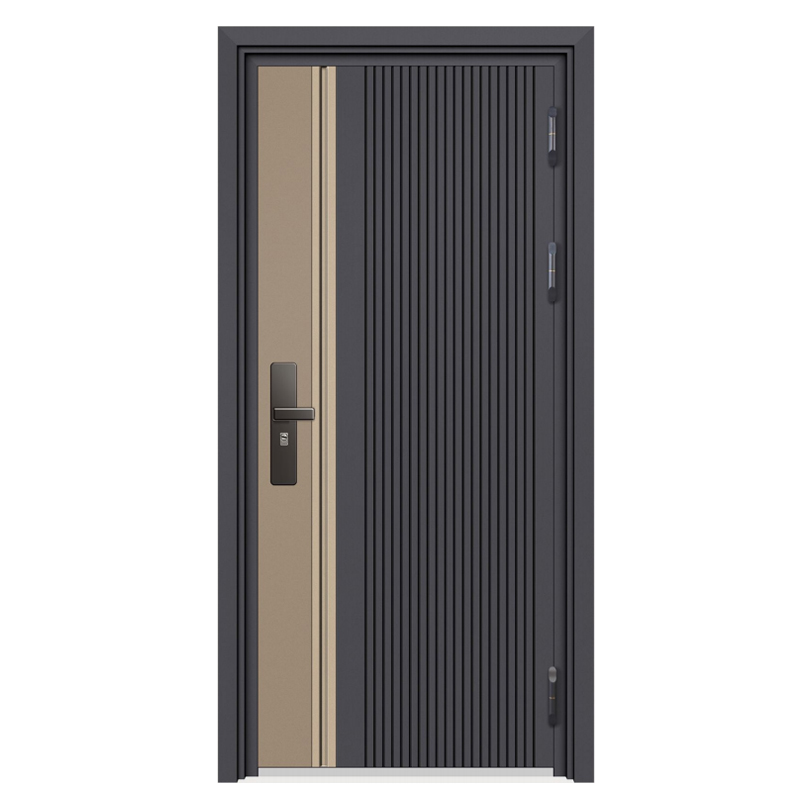
Our stainless steel front doors for homes use a 90mm door leaf direction with customizable frame structures, giving project buyers room to match different apartment entrance conditions.
One Opening Direction Standard Reduces Site Confusion
Apartment projects often include left-opening, right-opening, inward-opening, and outward-opening units. If these details are not clearly marked, installers may bring the wrong door to the wrong apartment.
For distributors, door schedules should be confirmed before shipment. Each carton or pallet should match the unit number, floor zone, opening direction, and hardware configuration. This small management step can prevent costly site mistakes.
Finish Stability Affects The Whole Building Look
Color Difference Is Easy To Notice In Corridors
In apartment buildings, doors are often installed along the same corridor or repeated entrance area. If one batch has a darker tone and another batch has a different gloss level, the difference becomes obvious after installation.
The door can support space gray or custom finishes. For project buyers, the approved finish should be kept as the batch standard. Color sample confirmation, production record, and final inspection should all follow the same reference.
Surface Protection Starts Before Delivery
Stainless steel doors need clean visible surfaces at handover. Scratches, corner pressure, or coating damage can stop installation even when the structure is correct.
Distributors should ask how the door surface, frame edge, lock area, and accessories are protected during packing. Apartment projects cannot afford repeated replacement caused by transit damage.
Hardware Should Stay The Same Across Every Unit
Lock Configuration Must Be Repeated Accurately
For apartment projects, lock consistency affects both installation and future maintenance. If one batch uses a different lock body or accessory set, facility teams may face spare part confusion later.
The door can be matched with a stainless steel 9-pillar lock body. Buyers should confirm lock type, lock hole position, cylinder requirement, handle style, and accessory list before production. These details should not change between floors or later replenishment orders.
Hinges Carry Long-Term Maintenance Pressure
Door distributors should not treat hinges as a minor detail. Apartment entry doors are used daily, and weak hinge support can lead to sagging, rubbing, difficult closing, or lock misalignment.
A stainless steel 5-hole hinge direction gives the door stronger support for residential entry use. For bulk projects, hinge type, finish, quantity, and installation position should remain consistent across the full order.
Installation Teams Need Fewer Variables
Standardized Frames Help Reduce Rework
A door that looks good in the warehouse may still create site problems if the frame does not match the wall condition. For apartment buildings, the frame should be reviewed together with wall thickness, finished floor height, corridor layout, and seal position.
Custom frame structures can help project buyers match different building conditions, but customization should be controlled. Too many frame variations in one project can slow down installation and increase the chance of wrong delivery.
Clear Packing Helps The Site Move Faster
Apartment installation teams work by sequence. They need to know which door belongs to which unit without opening every package.
Before shipment, distributors should request clear carton or pallet marking for size, color, opening direction, floor zone, lock type, and frame style. Organized packing helps installers move faster and reduces mistakes during project handover.
Compare Long-Term Service, Not Only Delivery Price
Facility Teams Need Replacement Logic
After the building is occupied, property managers may need replacement locks, hinges, seals, or surface repair support. If each batch has different hardware or finish details, maintenance becomes harder.
For stainless steel entry doors residential projects, distributors should keep the approved hardware list and finish record for future replenishment. This helps the apartment operator manage repairs without replacing unrelated parts.
Durability Supports Fewer Resident Complaints
Apartment doors face daily opening, closing, cleaning, corridor humidity, and occasional impact. 304 stainless steel gives buyers a practical direction for long-term residential entry use, especially where corrosion resistance and stable appearance are important.
Developers want fewer complaints after handover. Distributors can support that by comparing material, door structure, finish control, hinge strength, lock system, and packing standard together.
Before Confirming An Apartment Door Order
A good apartment door supply plan should answer practical questions before production starts:
Are all door sizes confirmed by unit type?
Are opening directions clearly marked?
Is the approved finish locked for every batch?
Are lock bodies, hinges, handles, and accessories consistent?
Is the frame matched with the wall condition?
Is packaging marked for fast site installation?
Is there a record for future maintenance and reorder needs?
Build A Door Supply Plan That Passes Project Handover
Apartment projects need entrance doors that look consistent, install efficiently, and remain easier to maintain after residents move in. A strong sample is only the starting point. The real test is whether every door in the building follows the same size, finish, frame, lock, hinge, and packing standard.
If your business needs stainless steel entry doors residential for apartment buildings, residential towers, rental housing, or multi-unit developments, come to us to prepare the project supply plan properly. Send the door schedule, opening sizes, finish requirement, hardware configuration, frame structure, packing marks, and delivery sequence. Our team can help match the door order with your apartment project, so installation is smoother and final handover is easier to control.