


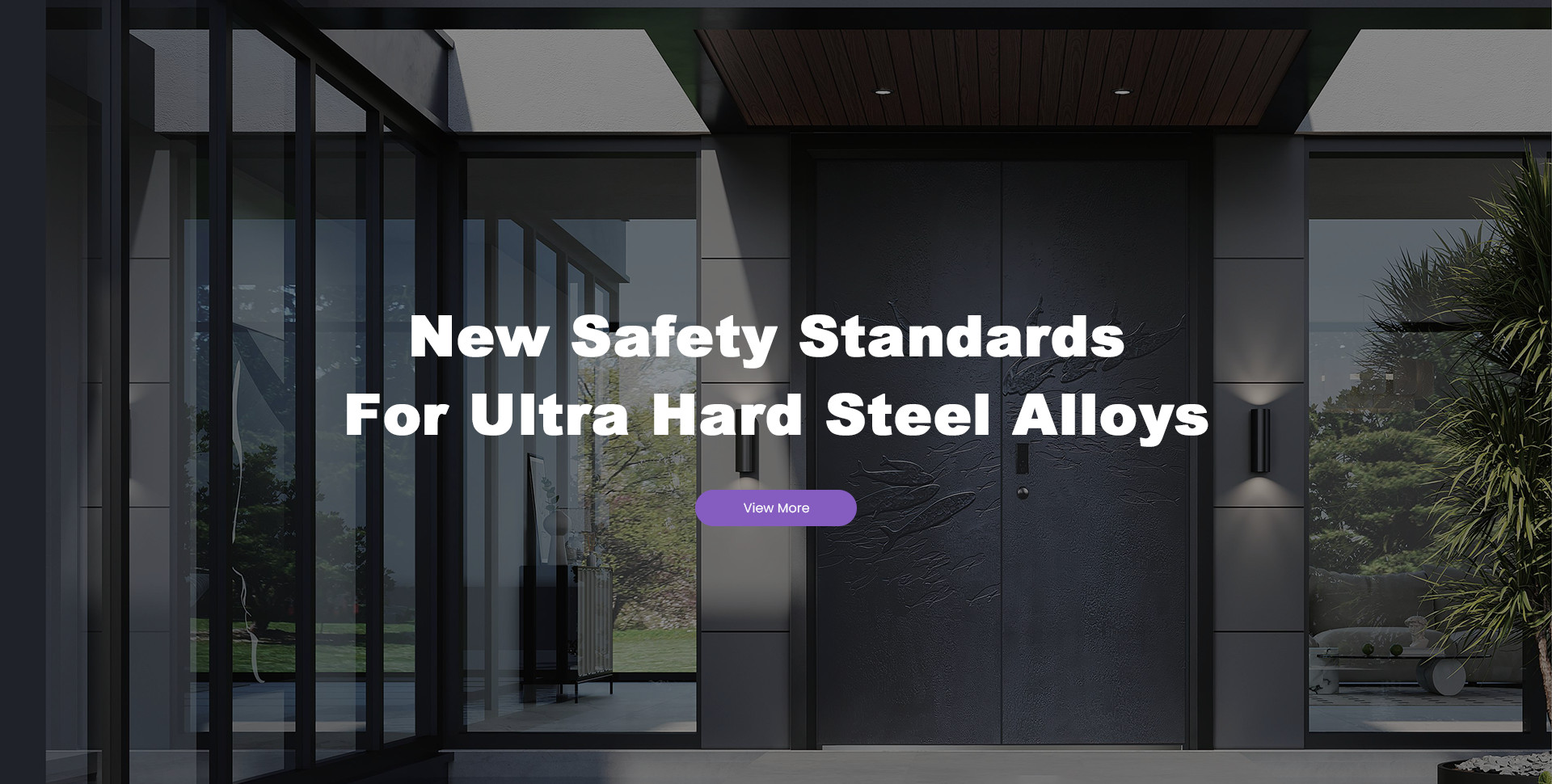

What Is The Difference Between Steel And Aluminum Security Doors?
Steel and aluminum Security Doors differ in weight, rigidity, corrosion resistance, design flexibility, installation requirements, and application suitability. Steel is generally used when the project requires a heavier and more rigid entrance structure. Aluminum is often selected for its lower weight, corrosion resistance, and modern architectural appearance.
The right choice depends on the complete door system, including the door leaf, frame, hardware, surface treatment, wall structure, and local environment.
Table of Contents
How Steel and Aluminum Behave Differently
Steel is a ferrous metal with strong rigidity and high structural stability. It is widely used for reinforced entrance doors, security doors, commercial doors, villas, and project applications.
Aluminum is a lightweight metal with good corrosion resistance and a high strength-to-weight ratio. It is common in modern residential doors, apartment projects, architectural entrances, and commercial buildings.
Both materials can be used for security doors when the construction is properly designed. The material name should not be used as the only basis for purchase.
Door Weight
Steel security doors are usually heavier. This can create a solid feel and support stronger impact resistance, but it also increases the requirements for hinges, frames, transport, and installation.
Aluminum security doors are lighter and may be easier to handle on site. Reduced weight can lower installation difficulty and reduce stress on the hinges during daily use.
For international project procurement, door weight also affects:
Container loading
Packaging material
Manual handling
Installation labor
Transportation cost
Storage requirements
Structural Strength
Steel usually provides higher rigidity for large or heavy door structures. It may be suitable for entrances that experience frequent use, rough handling, or greater impact risk.
Aluminum can also provide reliable performance when the profile design, wall thickness, internal reinforcement, locking points, and frame structure are correctly matched.
A comparison based only on material strength can be misleading. The supplier should explain:
Door leaf structure
Reinforcement layout
Frame design
Locking points
Hinge fixing
Wall connection
Hardware compatibility
Corrosion Resistance
Steel doors need protective surface treatment to reduce corrosion risk. This is particularly important for coastal properties, humid regions, rainy climates, and entrances exposed to outdoor conditions.
Aluminum normally provides strong corrosion resistance, which makes it attractive for exterior doors. However, the complete door also contains locks, hinges, handles, fasteners, and other components that require suitable material selection.
For outdoor projects, buyers should discuss the climate before selecting the coating and hardware.
Design Flexibility
Steel doors can be produced with many surface finishes and decorative treatments. They may include wood-look patterns, brushed effects, metallic finishes, embossed panels, and luxury decorative elements.
Aluminum doors are often selected for slim profiles, clean lines, lighter visual proportions, and modern architecture. They can also support multiple colors, textures, and customized surface designs.
Our front door products include stainless steel, steel, aluminum, luxury, and customized entrance door designs for different markets.
Security Performance
The security performance of a door depends on the entire structure. Buyers should not assume that every steel door provides a higher level of protection than every aluminum door.
Review the following components:
Door leaf thickness
Internal reinforcement
Frame profile
Locking system
Hinge protection
Door-to-frame connection
Wall fixing method
Surface and edge treatment
Glass or panel design
Installation accuracy
A strong door leaf may perform poorly if the frame or wall fixing is weak. A properly designed aluminum system may provide suitable performance for many residential and commercial entrances.
Which Material Works Better in Homes?
Steel may be appropriate for homeowners who want a solid main entrance with strong rigidity and a substantial appearance.
Aluminum may be more suitable for:
Modern villas
Apartment buildings
Lightweight exterior doors
Humid environments
Contemporary residential projects
Entrances with large decorative profiles
The choice should also consider door size, climate, privacy, glass area, hardware, and daily opening frequency.
Which Material Works Better in Commercial Buildings?
Commercial buildings often require different entrance solutions in different areas. A hotel may use luxury aluminum doors in guest-facing areas, stainless steel doors in humid or high-traffic zones, and steel security doors for service or storage entrances.
A Wholesale Supplier of steel and aluminum security doors should be able to provide multiple materials and configurations for one project.
For a Bulk Order of steel and aluminum entrance doors, buyers should confirm:
Material by product model
Door and frame dimensions
Surface finish
Hardware specification
Opening direction
Packing method
Quantity by location
Delivery schedule
Installation requirements
Inspection standard
Manufacturing and Customization
An OEM ODM Manufacturer of security doors can help develop products for different customer groups and markets.
Customization may include:
Door size
Frame profile
Reinforcement structure
Surface color
Decorative pattern
Glass panel
Handle and lock
Hinge arrangement
Logo and labeling
Export packaging
We support finished and semi-finished door production for distributors, contractors, developers, and brand owners. Our factory uses laser and CNC automation, ERP production management, coordinated assembly, and 100% testing before shipment.
Our manufacturing experience covers more than 47 years, with a 170,000-square-meter standard workshop, over 300 employees, and production capacity exceeding 50,000 units.
Final Recommendation
Steel is generally more suitable for heavier, rigid, and heavy-duty entrance applications. Aluminum is often preferred when lower weight, corrosion resistance, modern design, and easier installation are important.
The correct choice should be based on the complete entrance system and the actual building environment. Buyers can send opening dimensions, application details, preferred material, target finish, and quantity through our project inquiry service.