


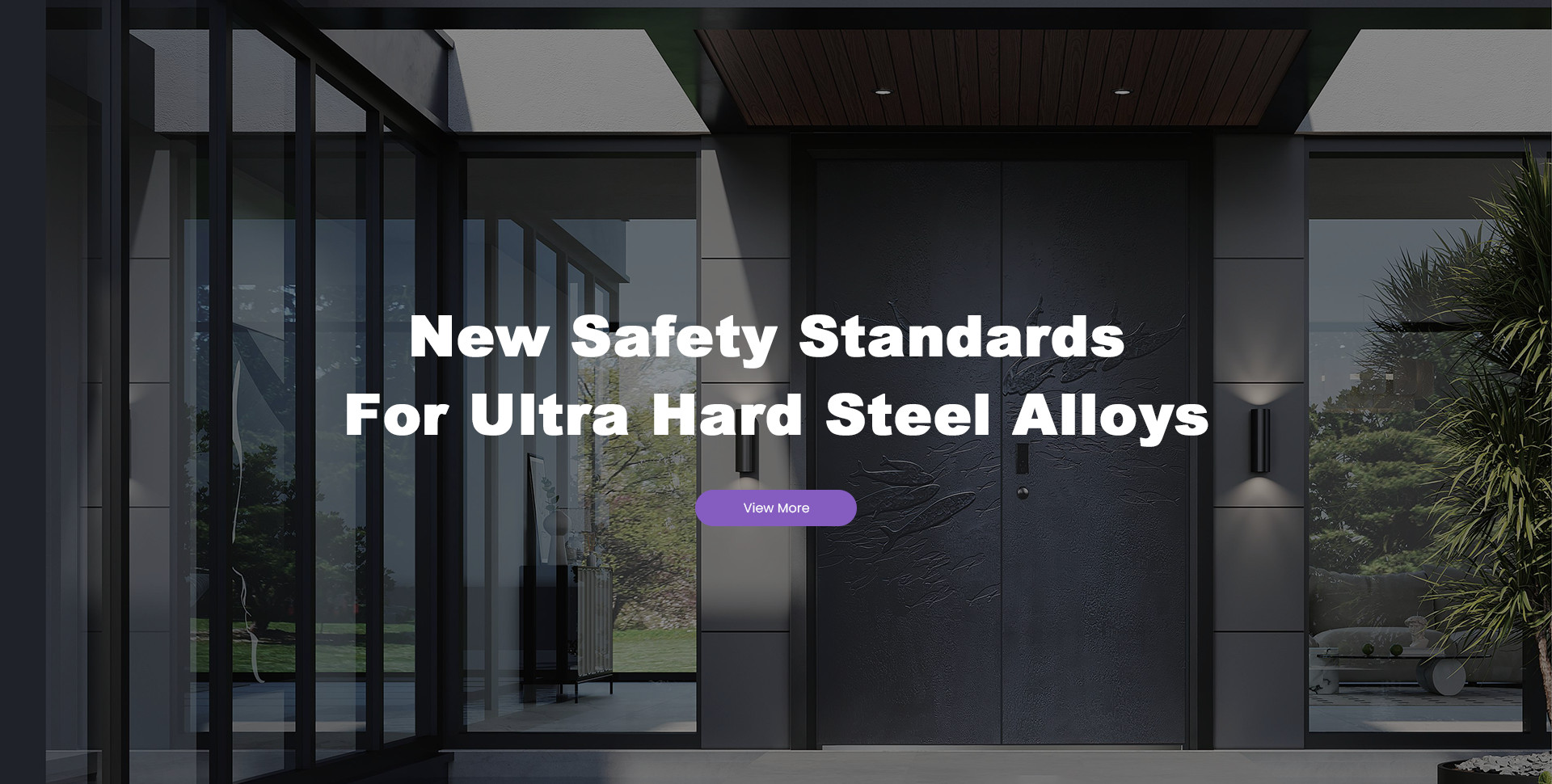

What to Know Before Replacing Your Home's Front Door?
Before replacing a home front door, confirm the opening size, wall thickness, swing direction, frame dimensions, threshold, security requirements, hardware, weather exposure, finish, and installation method. The door should be specified as a complete system.
Table of Contents
- Is Replacing a Front Door Just a Matter of Measuring the Door?
- What Measurements Should Be Taken?
- Should the Old Frame Be Replaced Too?
- What Security Features Should a New Front Door Have?
- Does the Front Door Need to Match the House?
- Which Material Should Be Used for a Replacement Door?
- Should the Door Open Inward or Outward?
- What About Weather Sealing?
- Should a Front Door Have Glass?
- How Much Customization Is Practical?
- What Should Be Checked Before Removing the Old Door?
- How Can Replacement Projects Avoid Installation Problems?
- Why Is Manufacturer Experience Important?
- Request a Replacement Front Door Quote
Is Replacing a Front Door Just a Matter of Measuring the Door?
No.
One of the most common replacement problems is measuring only the old door leaf.
The new door also has to match:
Rough opening
Finished opening
Wall thickness
Frame depth
Threshold
Hinge position
Handle position
Opening direction
A door can have the correct nominal size but still fail to fit properly if the frame or wall condition is different.
What Measurements Should Be Taken?
Before ordering, record at least:
| Measurement | Why It Matters |
|---|---|
| Opening Width | Determines door size |
| Opening Height | Determines door size |
| Wall Thickness | Determines frame configuration |
| Threshold Height | Affects bottom clearance |
| Hinge Side | Determines handing |
| Opening Direction | Affects hardware and installation |
| Frame Depth | Ensures wall compatibility |
For a replacement project, photographs of the existing opening are also useful.
Should the Old Frame Be Replaced Too?
Sometimes.
If the existing frame is:
Bent
Corroded
Poorly anchored
Structurally weak
Incorrectly sized
Difficult to seal
installing a better door into the old frame may not produce the expected result.
For a security-oriented replacement, the frame should be evaluated together with the door leaf and locking system.
This is particularly important because a strong door leaf cannot compensate for a weak frame.
What Security Features Should a New Front Door Have?
The correct features depend on the home's location and risk level.
Possible features include:
Reinforced door leaf
Anti-pry structure
Multi-point locking
Reinforced strike area
Strong hinges
Protected hinge side
Solid frame
Secure anchoring
Weather sealing
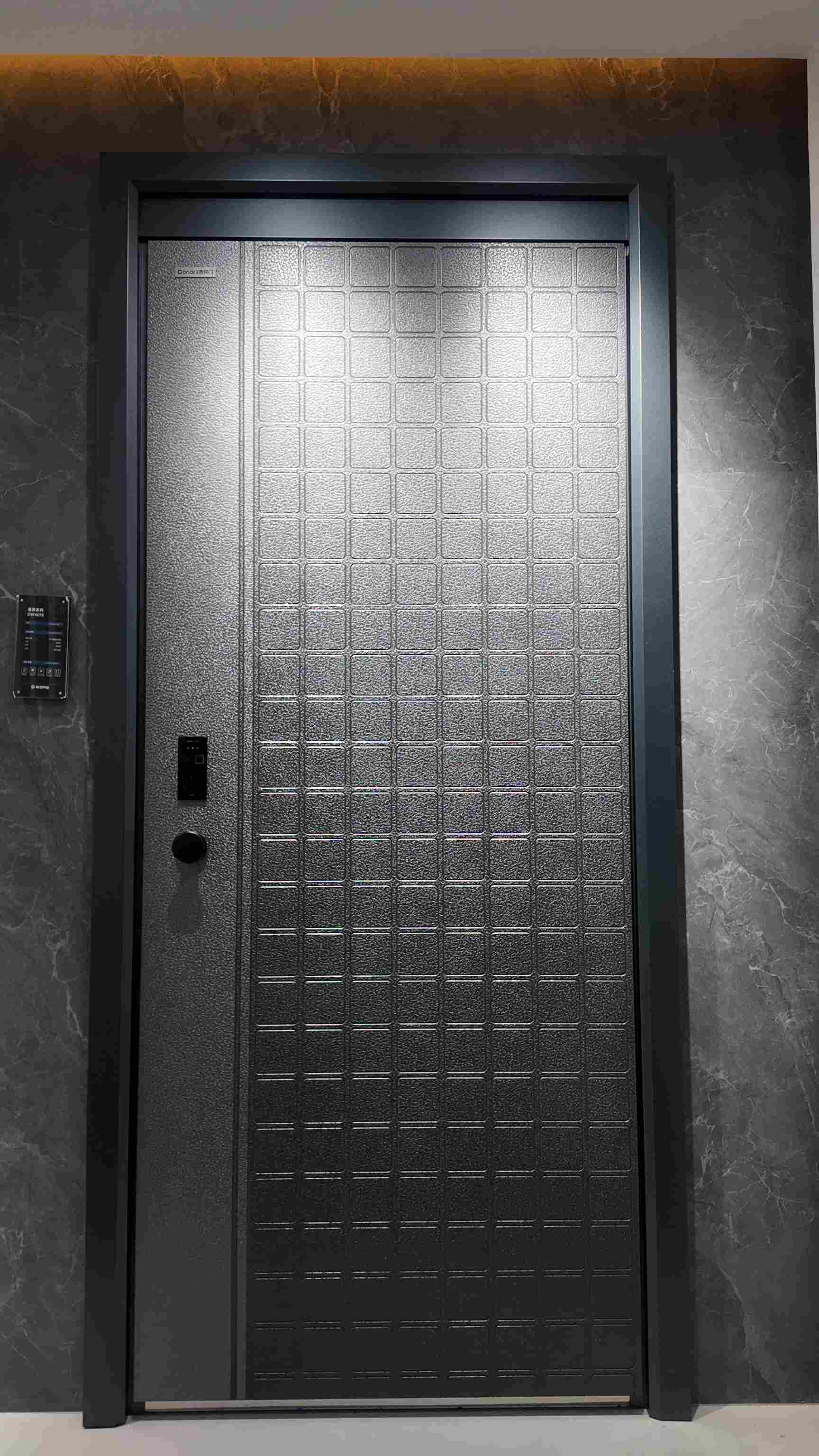
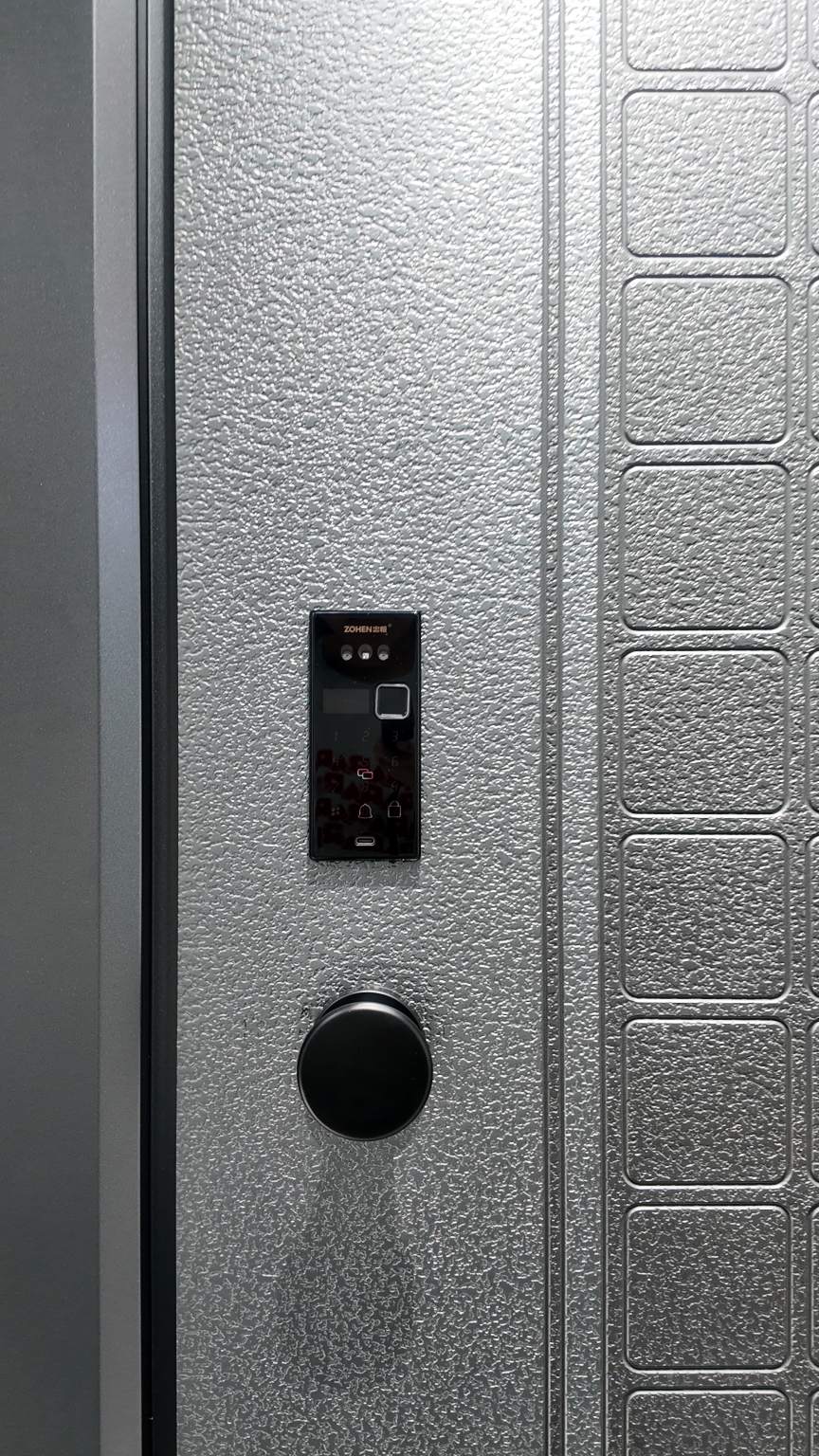
Our Custom Residential Steel Front Doors use a steel structure, interlocking anti-pry steel, a 95 mm door leaf, concealed-installation 3D hinges, a stainless steel 9-pillar lock body and polyurethane filling.
The configuration can also be customized for decorative panels, colors, frame structures and locks.
Does the Front Door Need to Match the House?
It should.
The front door is one of the most visible elements of a home's exterior.
The finish should coordinate with:
Exterior walls
Windows
Garage door
Gate
Roof
Outdoor lighting
Landscaping
For a modern house, a clean flush panel may work better than a heavily decorative design.
For a villa, a larger door with customized patterns or metallic finishes may create a stronger architectural focal point.
Which Material Should Be Used for a Replacement Door?
The choice depends on the building environment.
Steel
Useful when structural strength and security are major priorities.
Stainless Steel
Useful where corrosion resistance and strong exterior performance are important.
Aluminum
Useful when lighter weight, modern appearance and corrosion resistance are priorities.
Composite or Other Systems
May be suitable where insulation, appearance or specific local requirements dominate.
The material should not be selected separately from the frame, hardware and installation.
Should the Door Open Inward or Outward?
There is no universal answer.
The decision depends on:
Interior floor space
Exterior clearance
Local building rules
Emergency egress requirements
Security considerations
Weather exposure
Hardware configuration
For example, some residential projects may require an outward-opening configuration to preserve interior space, while other layouts may make inward opening more practical.
The opening direction should be confirmed before manufacturing.
What About Weather Sealing?
Exterior doors need to control water, air and dust around the perimeter.
The important areas include:
Door edges
Frame joints
Threshold
Bottom seal
Lock side
Hinge side
A poorly fitted door can develop water or air leakage even when the door material itself is excellent.
This is why frame accuracy and installation quality are just as important as the visible panel.
Should a Front Door Have Glass?
Glass can provide daylight and visual connection, but it introduces another design consideration.
Before adding glass, review:
Glass type
Glass thickness
Security requirements
Retention structure
Frame design
Privacy requirements
For a security-focused entrance where privacy and structural protection are the priority, a solid door may be preferable.
How Much Customization Is Practical?
A front door can often be customized in more areas than homeowners expect.
Common options include:
Door width
Door height
Frame structure
Surface color
Wood-grain finish
Decorative panels
Lock type
Handle
Hinge configuration
Opening direction
Our Secure Stainless Steel Custom Entry Doors support customization of size, appearance, frame structure, decorative panels and colors, with inward- or outward-opening configurations available.
What Should Be Checked Before Removing the Old Door?
Before demolition, record:
Existing door dimensions
Frame dimensions
Wall thickness
Threshold condition
Floor level
Hinge position
Handle height
Swing direction
Electrical wiring around the entrance
Any water damage or structural problems
This information can prevent expensive surprises after the old frame has been removed.
How Can Replacement Projects Avoid Installation Problems?
The most effective approach is to confirm the technical specification before production.
The manufacturer should receive:
Opening drawings
Photos
Exact measurements
Wall structure
Door material
Finish
Hardware
Opening direction
Quantity
For non-standard doors, a technical drawing or approved sample is especially useful.
Why Is Manufacturer Experience Important?
Replacement doors are not generic flat products.
Every building opening has its own conditions.
From a manufacturing perspective, the important task is to translate the site dimensions into a door-and-frame system that can actually be fabricated, packed and installed.
DONAR's current production system combines laser and CNC automation with ERP management, while its manufacturing operation states more than 47 years of experience and support for customized entrance-door production.
This type of production capability is particularly useful when a replacement project requires non-standard dimensions.
Request a Replacement Front Door Quote
For a home, villa, residential development or renovation project, prepare the opening width and height, wall thickness, current door photos, preferred material, opening direction, finish, lock requirements and quantity.
The team can review the existing entrance and determine whether a standard or customized door configuration is more appropriate.
For a replacement door quotation, custom size or OEM project, submit the details through the Request A Quote page.