



What Are The Different Types Of Entrance Doors?
Entrance doors can be classified by material, construction, opening method, security level, and application. Common options include aluminum, stainless steel, steel, armored, pivot, double, bifold, and glazed entrance doors.
Table of Contents
- How Are Entrance Doors Classified?
- What Are the main entrance door Types?
- What Are Aluminum Entrance Doors?
- What Are Stainless Steel Entrance Doors?
- What Are Steel Entrance Doors?
- What Is an Armored Entrance Door?
- What Is a Pivot Entrance Door?
- Are Double Entrance Doors Better?
- When Should a Bifold Entrance Door Be Used?
- What Is the Best Entrance Door Material?
- How Should a Buyer Select an Entrance Door?
- What Does a Manufacturer Consider During Custom Production?
- Why Does Supplier Experience Matter?
- Request an Entrance Door Recommendation
How Are Entrance Doors Classified?
There is no single classification system that works for every project.
For purchasing purposes, the most useful approach is to consider five dimensions:
Material → Construction → Opening → Function → Application
This makes it easier to compare products that may look similar but have very different performance characteristics.
What Are the main entrance door Types?
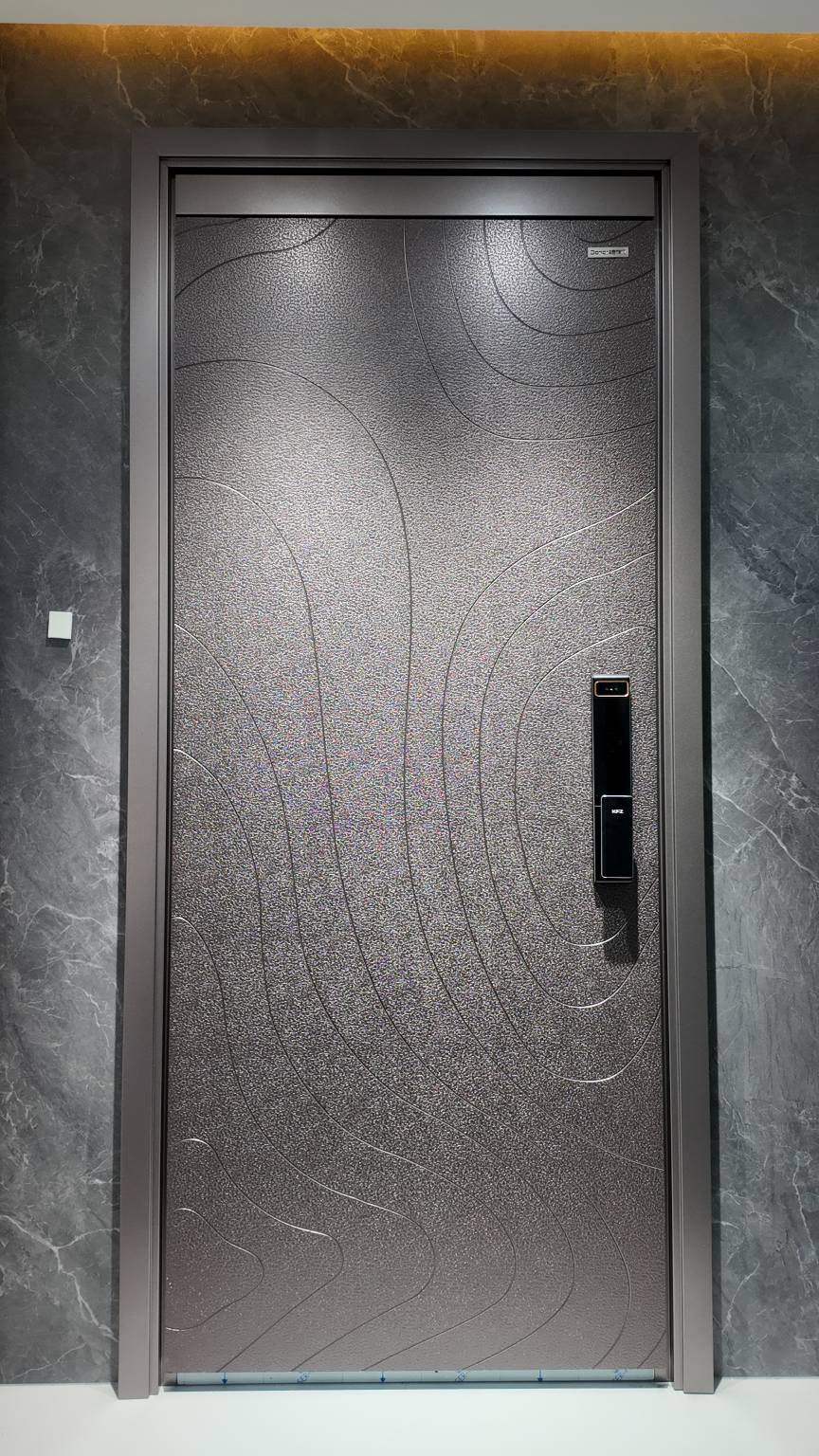
| Door Type | Main Strength | Typical Application |
|---|---|---|
| Aluminum Door | Light weight and corrosion resistance | Modern homes, apartments |
| Stainless Steel Door | Strength and corrosion resistance | Residential and security projects |
| Steel Door | Structural strength | Houses and developments |
| Armored Door | Reinforced protection | Villas and premium residences |
| Pivot Door | Large architectural opening | Luxury modern buildings |
| Double Door | Wider access | Villas and formal entrances |
| Bifold Door | Wide flexible opening | Modern indoor-outdoor spaces |
| Glazed Door | Daylight and visibility | Commercial and hospitality |
The final selection should be based on the actual project rather than simply choosing the most expensive category.
What Are Aluminum Entrance Doors?
Aluminum entrance doors are often selected for contemporary architecture because they support clean lines, multiple finishes and relatively low weight.
They can be useful for:
Modern houses
Villas
Apartments
Commercial buildings
Renovation projects
Aluminum can also be attractive in humid or coastal environments because of its corrosion resistance.
However, the profile structure, panel construction, surface treatment, seals and hardware still need to be evaluated.
The Aluminium Front Doors range can be considered when a project prioritizes modern appearance, weather resistance and lighter construction.
What Are Stainless Steel Entrance Doors?
Stainless steel doors are often selected when strength, durability and corrosion resistance are important.
For example, our Stainless Steel Security Door uses 304 stainless steel, a 90 mm door leaf and a 9-pillar stainless steel lock body.
The configuration can also be customized with different colors, decorative panels, door-frame structures and locking systems.
This makes stainless steel particularly useful for residential projects where security and exterior durability need to be considered together.
What Are Steel Entrance Doors?
Steel entrance doors are widely used where structural strength and security are major requirements.
Our Steel Exterior Front Door uses a high-strength steel structure with a 95 mm door panel, 50 mm back frame and 100 mm trim structure.
The door also uses polyurethane filling and a multi-point locking configuration.
For residential developments and distributors, steel can offer a useful combination of strength, customization and cost control.
What Is an Armored Entrance Door?
Armored doors are designed around enhanced structural protection.
Depending on the model, an armored entrance may incorporate:
Reinforced internal sections
Thickened panels
Strong frames
Reinforced hinges
Multi-point locking
Insulation filling
The term “armored” should not be treated as a universal performance grade. Buyers should still check the actual construction and test requirements.
What Is a Pivot Entrance Door?
A pivot door rotates around a pivot point positioned away from the outer edge of the door leaf.
This creates a distinctive opening motion and allows very large door leaves to be used.
Pivot systems are particularly suitable for:
Luxury villas
Modern mansions
Large architectural entrances
High-end commercial spaces
The major technical considerations include door weight, pivot hardware, floor support, opening clearance, sealing and installation accuracy.
Are Double Entrance Doors Better?
Double doors are useful when a wider opening is required.
They can provide:
Wider access
Strong visual presence
Easier movement of large furniture
More flexible opening width
However, a second door leaf also introduces another meeting joint and additional hardware.
For exterior projects, sealing and alignment therefore become more important.
When Should a Bifold Entrance Door Be Used?
Bifold doors are useful when a large portion of the wall needs to open.
They can connect:
Interior and garden
Living room and terrace
Commercial space and outdoor area
Hospitality areas and exterior spaces
Because multiple panels and joints are involved, the system needs careful alignment, sealing and drainage design.
What Is the Best Entrance Door Material?
There is no universal winner.
| Project Priority | Material/Type to Consider |
|---|---|
| Lower Weight | Aluminum |
| Corrosion Resistance | Stainless Steel / Aluminum |
| Structural Strength | Steel |
| Enhanced Security | Steel / Stainless Steel / Armored |
| Large Architectural Opening | Pivot |
| Wider Traditional Entrance | Double Door |
| Indoor-Outdoor Connection | Bifold |
| Premium Appearance | Stainless Steel / Aluminum / Luxury Systems |
The final decision should also consider climate, installation conditions, maintenance and budget.
How Should a Buyer Select an Entrance Door?
Start with the opening rather than the appearance.
Confirm:
Rough opening
Finished opening
Wall thickness
Door size
Opening direction
Security requirement
Climate
Finish
Hardware
Quantity
This information allows the manufacturer to determine which door construction is technically appropriate.
What Does a Manufacturer Consider During Custom Production?
For non-standard entrance doors, the design has to move from drawing to actual production.
A typical process includes:
Design Confirmation → Material Preparation → Cutting/Forming → Welding → Assembly → Surface Treatment → Inspection → Packing
The manufacturing challenge is maintaining the same dimensions, finish and hardware configuration across multiple units.
This becomes especially important for developers and distributors ordering different sizes within the same entrance-door series.
Why Does Supplier Experience Matter?
Entrance doors are large, structural products. A supplier needs to coordinate more than surface appearance.
DONAR's current manufacturing information states that its door business began in 1979, with approximately 170,000㎡ of standard workshop space, more than 300 employees and production capacity exceeding 50,000 units. The factory also supports OEM/ODM production and 100% testing before shipment.
For B2B buyers, this type of manufacturing infrastructure can be more useful than simply comparing catalog styles.
Request an Entrance Door Recommendation
If the project is still comparing aluminum, stainless steel, steel, armored or luxury entrance doors, send the opening dimensions, application, preferred style, security requirement, quantity and destination market.
The team can compare suitable constructions and recommend a configuration according to the actual project.
For product samples, customized entrance doors or bulk project supply, submit the details through the Request A Quote page.