



What Makes A Door A Security Door?
A security door is defined by its complete protective structure rather than appearance alone. The door leaf, frame, locking system, hinges, reinforcement, anchoring, and installation must work together to resist forced entry and maintain stable daily operation.
Table of Contents
- Is a Thick Door Automatically More Secure?
- What Parts of a Door Affect Security?
- How Does the Door Leaf Affect Security?
- Why Is the Door Frame So Important?
- What Does a Multi-Point Lock Do?
- Do Hinges Matter for Security?
- What Is Anti-Pry Door Construction?
- Does Glass Make a Security Door Less Secure?
- Does a Smart Lock Make a Door a Security Door?
- What Does a Security Door Manufacturer Check?
- Does Security Door Design Depend on the Application?
- What Makes a Security Door Worth Buying?
- Request a Security Door Specification
Is a Thick Door Automatically More Secure?
No.
Door thickness can contribute to structural strength, but it is only one part of the system.
A thick panel installed in a weak frame may still create a vulnerable entrance. Similarly, adding a stronger lock to a poorly reinforced door does not automatically create a high-security system.
A more useful evaluation looks at:
Leaf + Frame + Lock + Hinge + Anchoring + Installation
That combination is what determines whether the entrance works as a complete security barrier.
What Parts of a Door Affect Security?
The major components can be grouped as follows:
| Component | Security Role |
|---|---|
| Door Leaf | Provides the main physical barrier |
| Frame | Transfers loads around the opening |
| Lock Body | Controls the main locking mechanism |
| Locking Points | Distributes resistance |
| Hinges | Supports the door and maintains alignment |
| Anti-Pry Structure | Reduces vulnerable edge gaps |
| Anchoring | Connects the frame to the building |
| Seals | Supports weather and gap control |
A buyer evaluating only the lock may miss several other important areas.
How Does the Door Leaf Affect Security?
The door leaf is the main moving barrier.
A stronger security design may incorporate:
Reinforced steel
Interlocking edges
Internal reinforcement
Multi-layer construction
Thicker structural sections
Impact-resistant filling
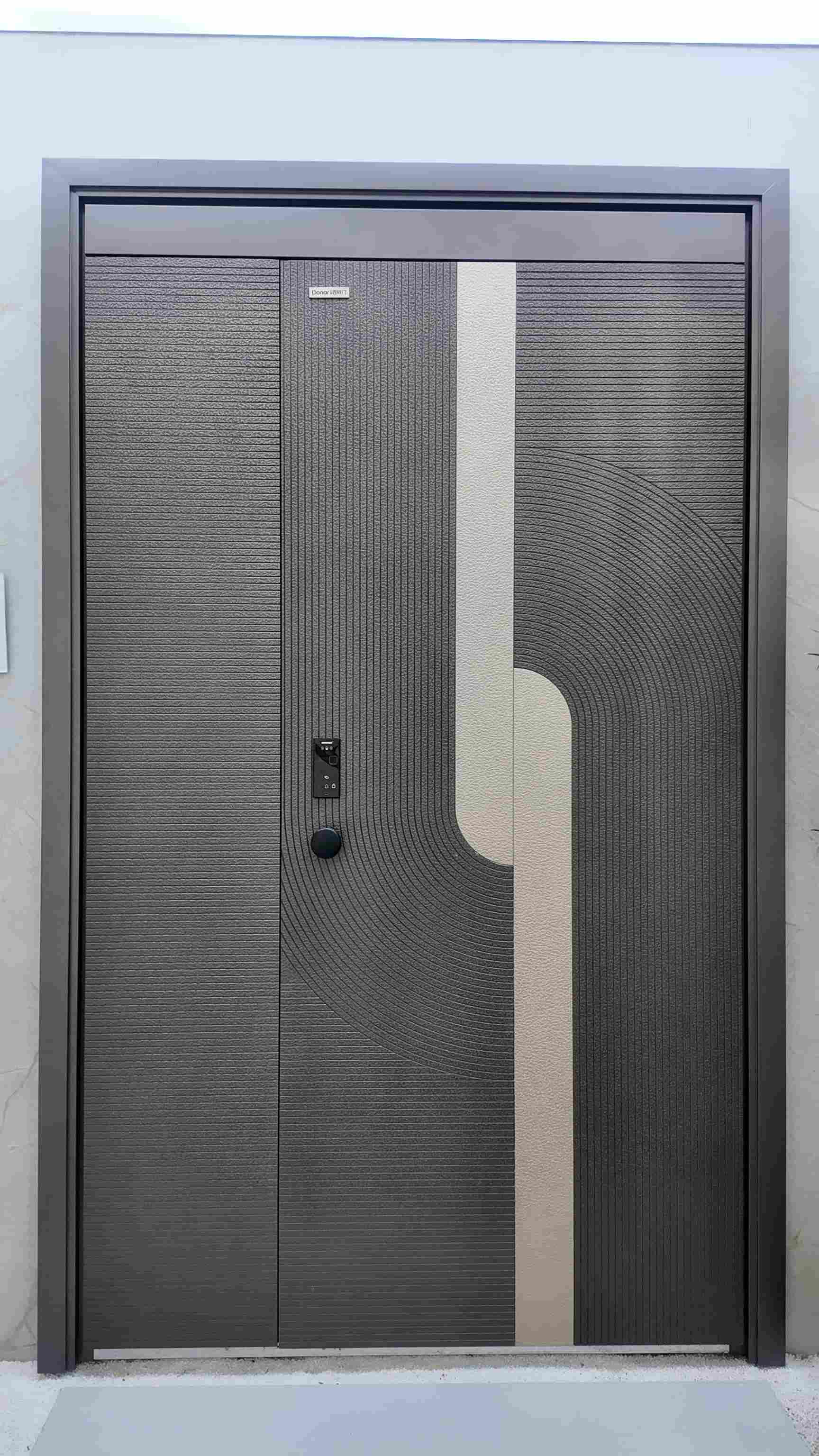
Our High Security Stainless Steel Doors for Homes use a reinforced stainless steel structure and are offered with multiple locking positions, customized frame structures and different finishes.
The exact specification should still be selected according to the target market and project requirements.
Why Is the Door Frame So Important?
The frame transfers forces from the door into the surrounding opening.
If the frame is weak or improperly anchored, the door leaf may not perform as intended.
Before production, project buyers should confirm:
Wall thickness
Rough opening
Finished opening
Frame depth
Fixing method
Threshold condition
Floor level
Opening direction
This is one reason custom entrance doors should be engineered around the building opening instead of treating the door as a standalone product.
What Does a Multi-Point Lock Do?
A multi-point locking system distributes the locking engagement across several locations along the door edge.
This can provide a more stable relationship between the door leaf and frame than relying only on one central latch.
Our Steel Security Front Door uses a stainless steel 9-pillar lock body together with an interlocking anti-pry structure.
The practical advantage is not simply the number of locking points. The lock body, strike area, door edge and frame must all be manufactured to work together.
Do Hinges Matter for Security?
Yes.
Hinges carry the door's weight and maintain alignment during repeated opening and closing.
A security entrance may use:
Heavy-duty hinges
Concealed hinges
Adjustable hinges
Protected hinge arrangements
Multi-hole hinge structures
The correct choice depends on the door weight, opening direction and project configuration.
A hinge system that is too weak can eventually cause sagging, uneven gaps and poor locking alignment.
What Is Anti-Pry Door Construction?
Anti-pry construction focuses on the vulnerable edge between the door leaf and frame.
An interlocking structure can make it more difficult to access this gap directly.
However, anti-pry performance should never be judged from a marketing name alone.
Buyers should ask:
How is the edge constructed?
What material is used?
How does it engage with the frame?
Is the lock side reinforced?
Is the hinge side protected?
Has the configuration been tested?
This approach gives buyers a more useful technical basis for comparison.
Does Glass Make a Security Door Less Secure?
Glass does not automatically make a door insecure, but the glass specification becomes another part of the security system.
For doors incorporating glass, buyers should review:
Glass type
Thickness
Panel location
Retention method
Frame structure
Security requirements
For high-security applications where daylight is not required, a solid panel can simplify the structural design.
Does a Smart Lock Make a Door a Security Door?
Not by itself.
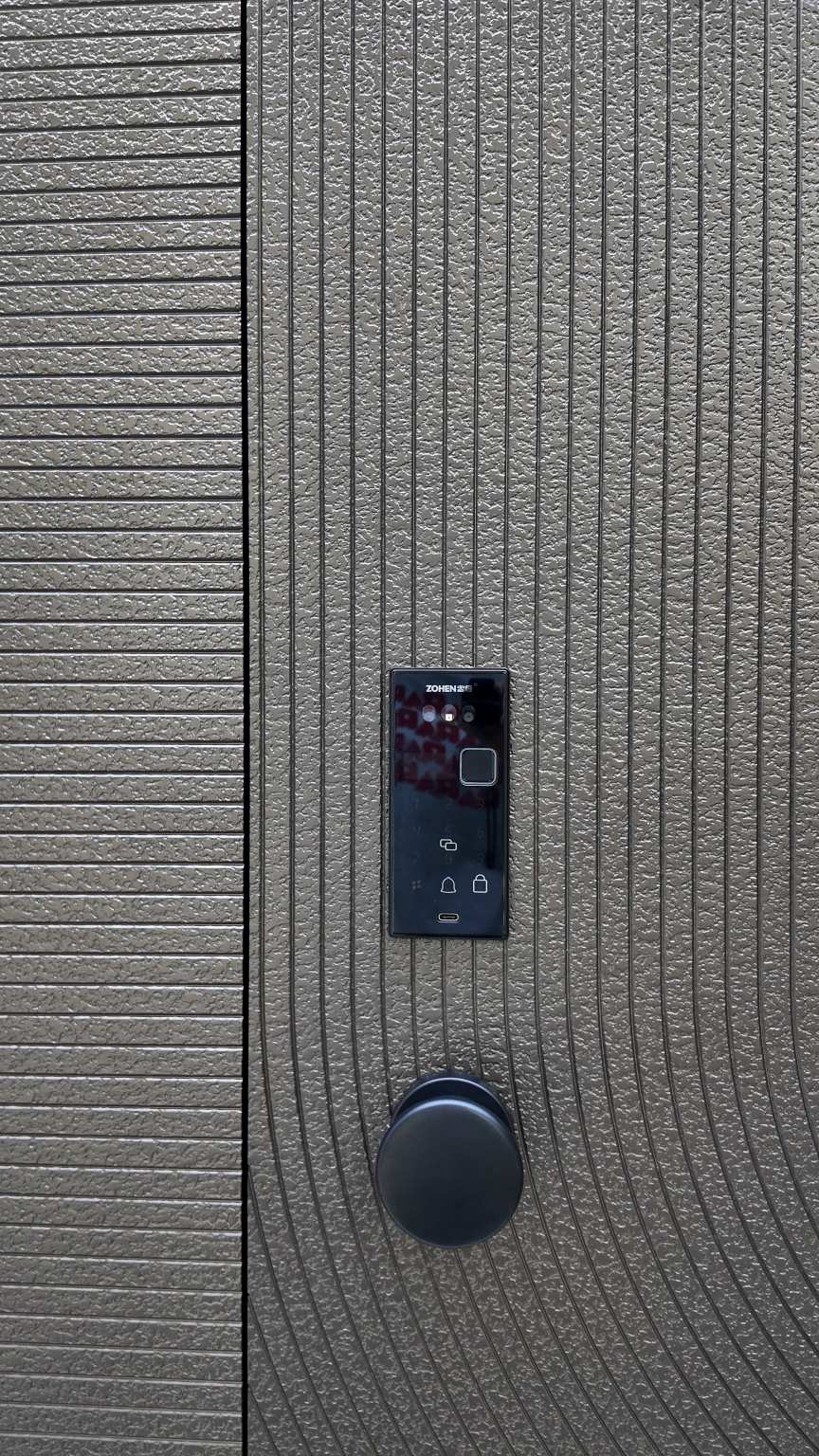
A fingerprint, password or smart lock can improve access convenience, but electronic access control is different from physical door security.
The complete system should still be evaluated for:
Door structure
Lock body
Mechanical backup
Strike reinforcement
Hinge protection
Frame anchoring
Emergency access
Smart functions should complement the door structure rather than replace it.
What Does a Security Door Manufacturer Check?
At the manufacturing stage, the most useful quality control is system-based.
Typical checks include:
Material specification
Door dimensions
Frame dimensions
Weld quality
Surface treatment
Lock installation
Hinge alignment
Door closing
Sealing
Final operation
DONAR's current manufacturing information states that the factory uses laser and CNC automation together with ERP production management and conducts 100% testing before shipment. This type of production control is particularly relevant to project buyers who need repeated specifications across multiple units.
Does Security Door Design Depend on the Application?
Absolutely.
A villa entrance, apartment entrance, commercial building and service entrance may require very different specifications.
For example:
| Application | Common Priority |
|---|---|
| Villa | Security + design |
| Residential Community | Consistency + durability |
| Apartment | Security + daily operation |
| Commercial Building | Frequent use + access control |
| Coastal Property | Security + corrosion resistance |
| Distributor Range | Standardization + customization |
There is no single configuration that is ideal for every market.
What Makes a Security Door Worth Buying?
A reliable security door should have a clearly defined specification.
The buyer should be able to understand:
Material
Door leaf construction
Frame structure
Locking system
Hinge type
Surface finish
Opening direction
Installation requirements
Applicable testing or standards
If a supplier cannot explain these points, a visually impressive door may still be difficult to evaluate objectively.
Request a Security Door Specification
For distributors, contractors, developers and residential projects, provide the required door size, wall thickness, opening direction, material preference, lock requirements, finish, quantity and target market.
The team can then evaluate the door leaf, frame, hardware and installation requirements as one system.
For customized Security Doors, OEM/ODM development or bulk supply, send the project details through the Request A Quote page.