



Comparing Steel and Aluminum Doors: Which Is Best for Your Commercial Needs?
For commercial projects, steel doors are often considered when structural rigidity and security are priorities, while aluminum doors are attractive for lightweight construction and corrosion resistance. The best option depends on building use, traffic, climate, design, and project specifications.
Table of Contents
- What Should Commercial Buyers Evaluate First?
- How Do Steel and Aluminum Doors Compare in Commercial Applications?
- When Should Commercial Buyers Consider Steel Doors?
- When Is Aluminum a Practical Commercial Choice?
- Which Material Offers Better Long-Term Value?
- What Information Should Be Included in a Commercial Door RFQ?
- How Can DONAR Support Commercial Door Projects?
What Should Commercial Buyers Evaluate First?
Commercial door selection should begin with the function of the entrance rather than the material or appearance.
A door serving a main building entrance may have different requirements from one used for a service area, residential development, or security-sensitive access point.
Before requesting quotations, define the following:
Building type and entrance location.
Expected opening frequency and traffic.
Required security and locking features.
Exposure to rain, humidity, or coastal conditions.
Door dimensions and opening configuration.
Architectural finish and design requirements.
Installation conditions and maintenance expectations.
These details help determine whether steel, aluminum, stainless steel, or a customized combination is appropriate.
How Do Steel and Aluminum Doors Compare in Commercial Applications?
| Commercial Requirement | Steel Door Considerations | Aluminum Door Considerations |
|---|---|---|
| High-use entrances | Structural rigidity and suitable hardware are important | Profile strength and hardware capacity must match usage |
| Security-sensitive access | Reinforced leaf, frame, and locking options can be specified | Security depends on the complete engineered system |
| Humid environments | Coating and edge protection require attention | Corrosion resistance can be an advantage |
| Contemporary architecture | Decorative panels and metallic finishes offer flexibility | Clean lines and modern finishes are common advantages |
| Large door leaves | Weight and hinge capacity need careful evaluation | Profile reinforcement and deflection need assessment |
| Long-term maintenance | Coating condition and corrosion points require inspection | Hardware, seals, and surface finishes require inspection |
The table describes general material characteristics, not guaranteed performance. Actual specifications must be confirmed for the selected door model.
When Should Commercial Buyers Consider Steel Doors?
Steel doors are often worth evaluating when the entrance requires a rigid structure and a security-focused configuration.
Potential applications include:
Building entrances with defined security requirements.
Residential developments with standardized entrance specifications.
Service entrances exposed to frequent use.
Projects requiring reinforced locking and anti-pry features.
Customized entrances where a solid metal construction is preferred.
The door leaf should not be evaluated separately from the frame, hinges, lock body, and installation arrangement.
For example, a strong leaf attached to an inadequately designed frame may not deliver the intended performance. Buyers should therefore confirm the complete door-set specifications before placing a bulk order.
DONAR's steel entrance door range includes customizable entrance door options for residential and project applications.
When Is Aluminum a Practical Commercial Choice?
Aluminum is frequently considered for projects where lower weight, corrosion resistance, and contemporary design are important.
It may be suitable for modern building entrances, apartment developments, and architectural projects that require customized dimensions or distinctive finishes.
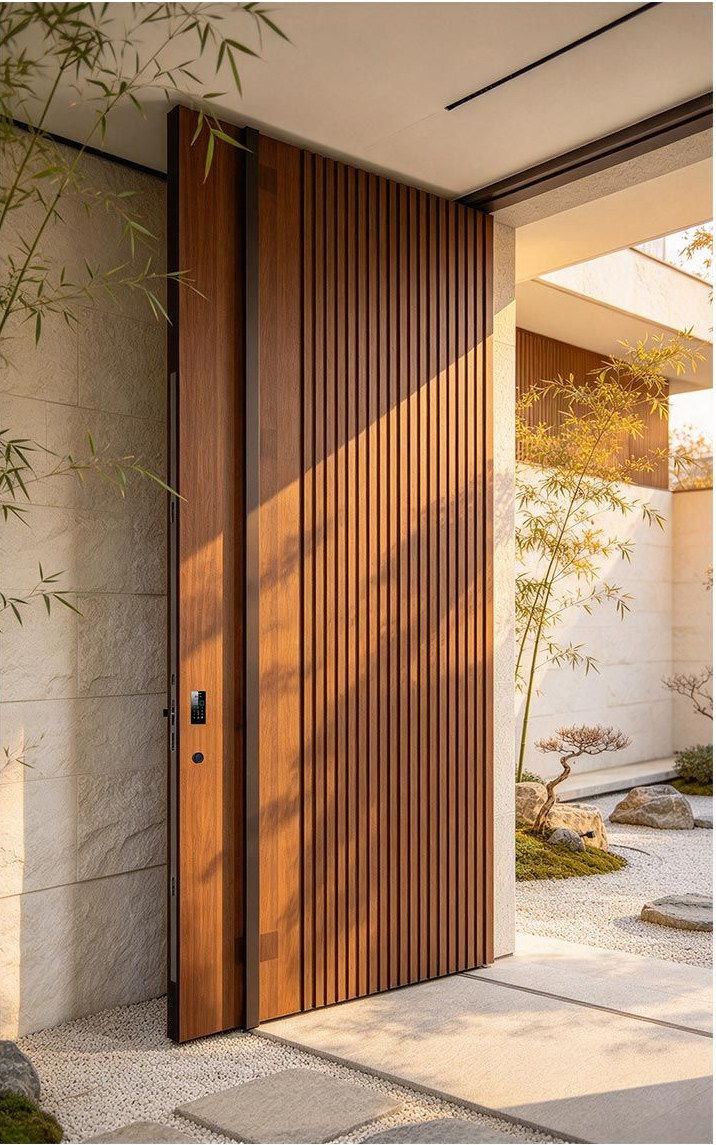
However, the aluminum profile must be designed for the door's size and operating conditions. Large door leaves may require specific reinforcement, hinges, pivots, and frame connections.
For commercial projects exposed to moisture, the complete assembly should also be reviewed for sealing, drainage, hardware compatibility, and surface treatment.
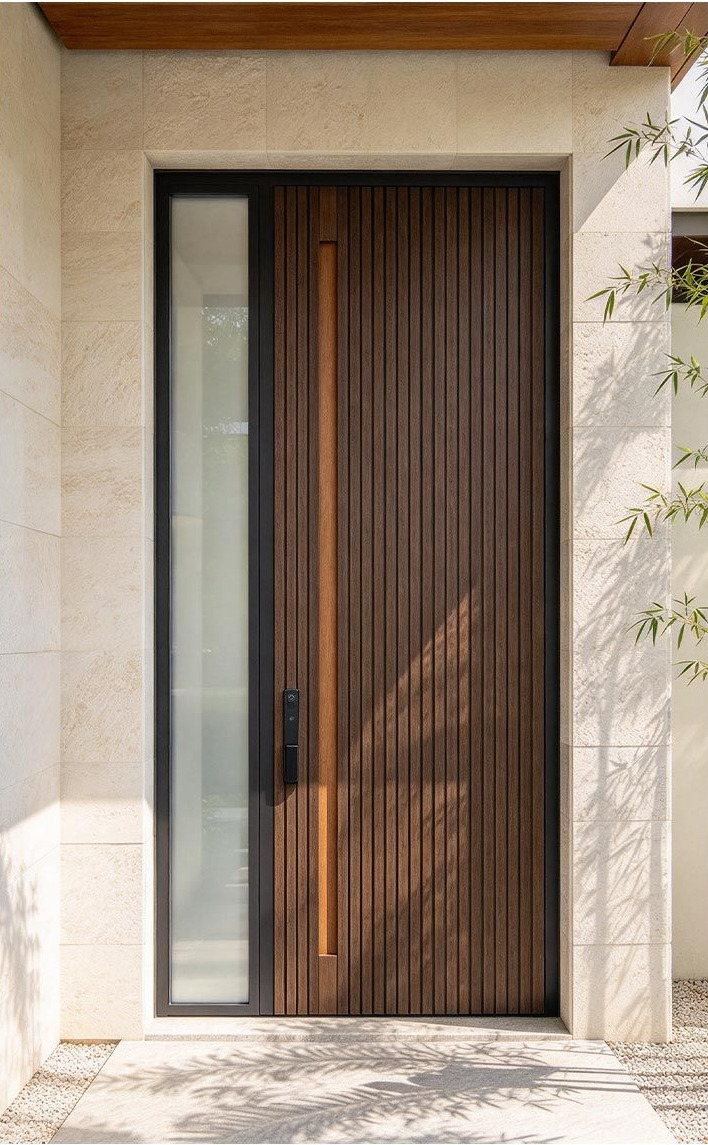
DONAR's aluminum front door range offers product options for entrance projects requiring customized appearance and construction.
Which Material Offers Better Long-Term Value?
The purchase price is only one part of the total cost.
Commercial buyers should also consider installation, hardware, maintenance, surface protection, replacement parts, and the consequences of downtime.
A lower-priced door may not provide good value if its configuration does not match the building's operating conditions. Conversely, specifying a heavier or more complex door may add cost without providing a useful benefit when a simpler system already meets the project's requirements.
A practical comparison includes:
Initial door and frame cost.
Hardware and installation requirements.
Environmental exposure and maintenance.
Required security features.
Expected operating frequency.
Availability of replacement components.
Customization and production lead time.
For multi-unit projects, consistency is equally important. The approved specifications should be applied across the order to reduce differences in dimensions, finishes, and hardware.
What Information Should Be Included in a Commercial Door RFQ?
A detailed request for quotation helps manufacturers evaluate the project and avoid repeated clarification.
Include the door schedule, dimensions, wall thickness, opening direction, material preference, finish, lock requirements, frame details, and estimated quantity.
If the project requires special performance, such as a specified security level or certified fire resistance, provide the exact requirement and the relevant documentation. A material description alone does not establish a particular performance rating.
For custom entrance projects, technical drawings and reference photographs can help clarify the intended appearance and construction.
How Can DONAR Support Commercial Door Projects?
DONAR manufactures customized steel, stainless steel, and aluminum entrance doors for distributors, contractors, developers, and door brands.
Our manufacturing process supports non-standard dimensions, finishes, frame structures, and hardware configurations according to the agreed specifications.
For projects requiring a material comparison, review our steel entrance doors and aluminum front doors. Then submit the door schedule, drawings, and quantity requirements through our inquiry page.