



Steel vs. Aluminum Doors: A Performance Study
Steel doors generally provide high structural rigidity and impact resistance, while aluminum doors offer lower weight and strong corrosion resistance. Actual performance depends on the complete door assembly, including the frame, reinforcement, hardware, finish, and installation.
Table of Contents
- What Are the Main Performance Differences Between Steel and Aluminum Doors?
- How Does Structural Strength Affect Door Performance?
- Which Material Performs Better in Humid or Coastal Environments?
- Does Steel Provide Better Security Than Aluminum?
- How Do Design and Customization Affect the Choice?
- Which Door Should Commercial and Residential Buyers Choose?
What Are the Main Performance Differences Between Steel and Aluminum Doors?
Steel and aluminum are both widely used in entrance door manufacturing, but their physical properties affect how each material performs in different environments.
Steel is commonly selected for projects requiring a rigid structure and a solid entrance barrier. Aluminum is often preferred when lower weight, corrosion resistance, and modern architectural styling are important.
Neither material is automatically superior in every situation. The correct comparison should consider the door's intended use, environmental exposure, structural design, and expected service conditions.
| Performance Factor | Steel Doors | Aluminum Doors |
|---|---|---|
| Structural rigidity | High potential with appropriate construction | Depends on profile design and reinforcement |
| Weight | Generally heavier | Generally lighter |
| Corrosion resistance | Requires suitable surface protection | Naturally corrosion-resistant, although finishes and hardware still matter |
| Security potential | Suitable for reinforced entrance structures | Depends on profile strength, reinforcement, locking, and frame design |
| Design flexibility | Supports decorative panels and various finishes | Supports modern profiles, carved panels, and lightweight designs |
| Maintenance | Requires inspection of coatings and vulnerable edges | Requires inspection of finishes, seals, and hardware |
| Cost | Depends on material grade and construction | Depends on profile design, finish, and hardware |
| Installation | Weight and frame anchoring require consideration | Profile strength and frame connections must be verified |
How Does Structural Strength Affect Door Performance?
Steel has high structural strength and is frequently used for residential entrance doors, Security Doors, and demanding building applications.
However, a steel outer panel alone does not determine the performance of the complete door. Internal reinforcement, frame construction, hinge capacity, lock positioning, and the connection between the frame and wall all influence how the entrance performs.
Aluminum doors can also provide reliable structural performance when the profiles, internal reinforcement, hinges, and frame are designed for the intended size and load.
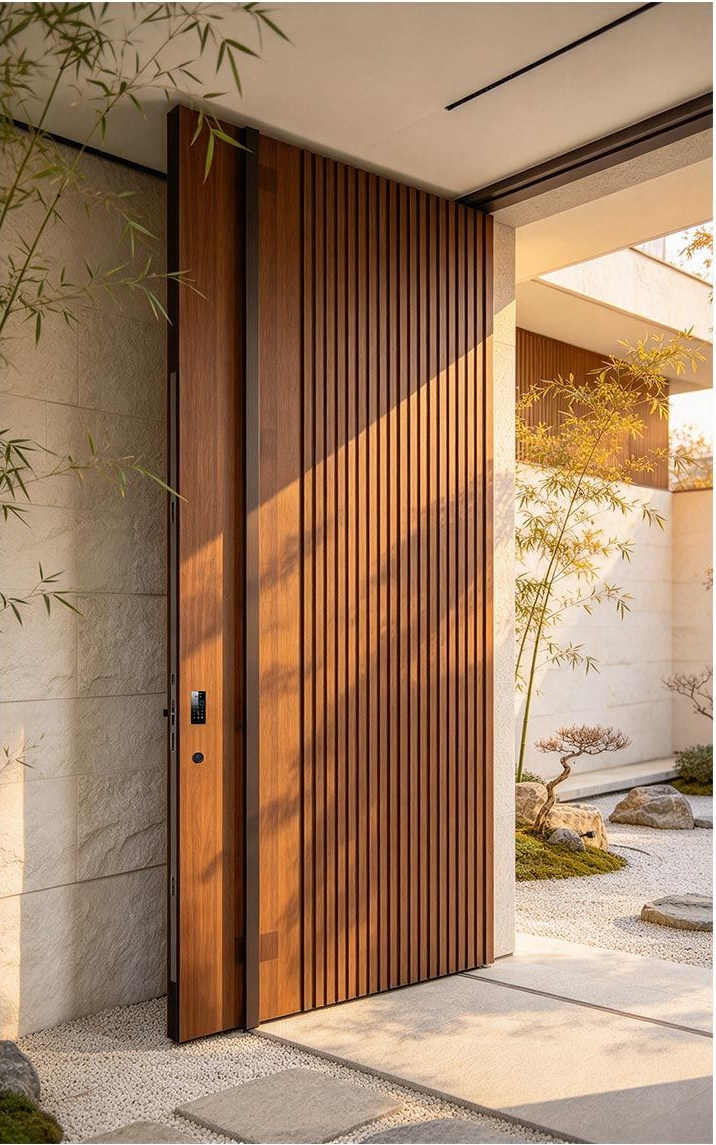
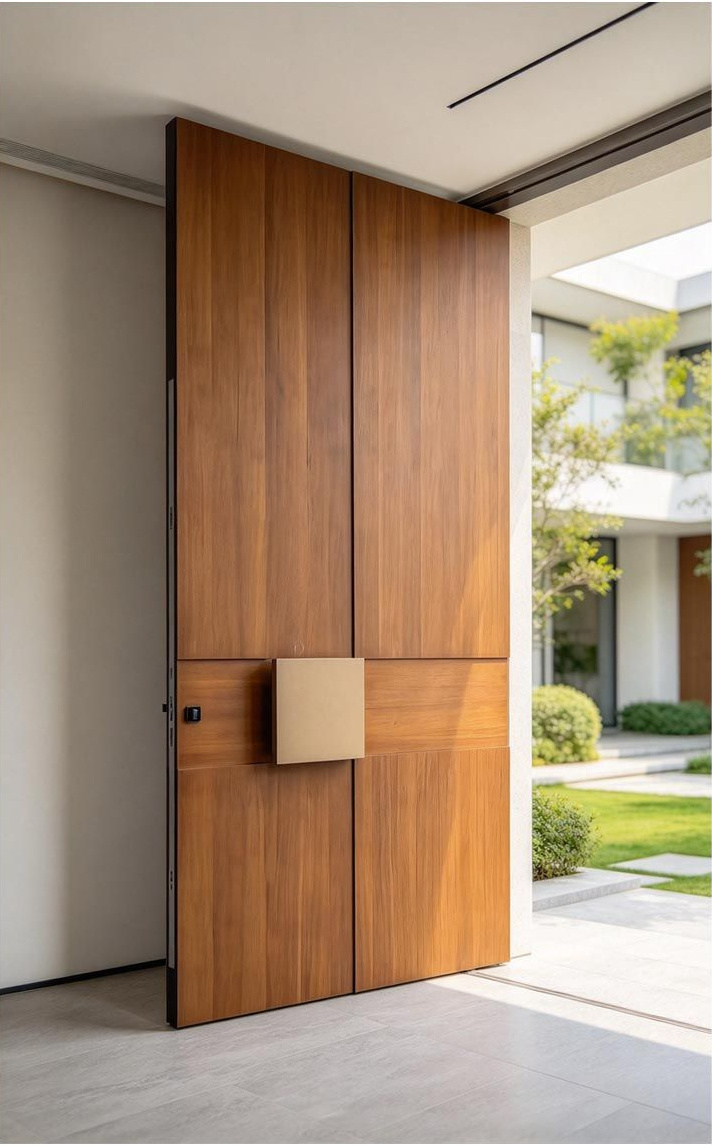
For oversized entrance doors, the design must account for door weight, opening frequency, hardware capacity, and potential deflection. A material that works well for a conventional door may require a different structural configuration for a large pivot or double-door system.
DONAR offers customizable steel entrance doors and aluminum front doors for projects with different structural and architectural requirements.
Which Material Performs Better in Humid or Coastal Environments?
Aluminum generally offers strong natural corrosion resistance, making it attractive for locations exposed to humidity, rain, and salt-laden air.
Steel can also perform well outdoors, but its protective coating and surface preparation are important. Damaged paint, exposed edges, poorly treated welds, and unsuitable fasteners can become corrosion points.
For either material, the complete door system must be evaluated. Water drainage, sealing, surface treatment, hardware compatibility, and installation quality all affect long-term condition.
For coastal projects, buyers should specify the environmental exposure rather than simply requesting a metal door. The required finish and hardware should be selected for the actual installation conditions.
Our article, Aluminum vs. Steel Front Doors: Which Is Better for Homes?, provides an additional comparison of strength, corrosion resistance, and design flexibility.
Does Steel Provide Better Security Than Aluminum?
Steel can provide a rigid structure for security-focused entrance doors, but security performance is determined by the complete assembly rather than the material name alone.
A useful evaluation considers:
Door leaf construction and reinforcement.
Frame strength and anchoring.
Lock body and locking points.
Hinge design and attachment.
Gaps between the door leaf and frame.
Installation quality and applicable performance requirements.
A poorly designed steel door may underperform a properly engineered alternative. Likewise, an aluminum door should not be assumed to provide a particular security level without reviewing its construction and supporting specifications.
For projects where forced-entry resistance is a major concern, review DONAR's security door range and confirm the required structural and locking features.
How Do Design and Customization Affect the Choice?
Steel doors can accommodate decorative panels, textured finishes, geometric patterns, and reinforced internal structures. Aluminum doors are often chosen for contemporary designs, clean lines, custom colors, and relatively lightweight construction.
For distributors, architects, and developers, customization may include:
Door dimensions and frame structures.
Panel patterns and surface finishes.
Opening direction.
Lock bodies, handles, and hinges.
Decorative components.
Packaging and project-specific configurations.
The design should be finalized alongside the technical requirements. A decorative change can affect panel construction, weight, hardware selection, or manufacturing complexity.
Which Door Should Commercial and Residential Buyers Choose?
Steel is worth considering when structural rigidity, a solid entrance construction, or security-focused features are major priorities.
Aluminum is often suitable when lower weight, corrosion resistance, and contemporary architectural design are central requirements.
For residential developments, villas, apartments, and commercial entrance projects, the decision should be based on the installation environment, door dimensions, required security level, maintenance expectations, and budget.
DONAR manufactures customized steel, stainless steel, and aluminum entrance doors for international distributors and project buyers. Share the opening dimensions, preferred material, finish, and technical requirements through our inquiry page to discuss a suitable configuration.