



How To Shim A Door?
To shim a door, position tapered shims between the door frame and wall opening at the hinges, lock area and other fixing points. Adjust them until the hinge jamb is plumb, the head is level and the gaps around the door are even. Installation of a commercial-grade Steel Entrance Door system should be verified repeatedly before anchors are fully tightened.
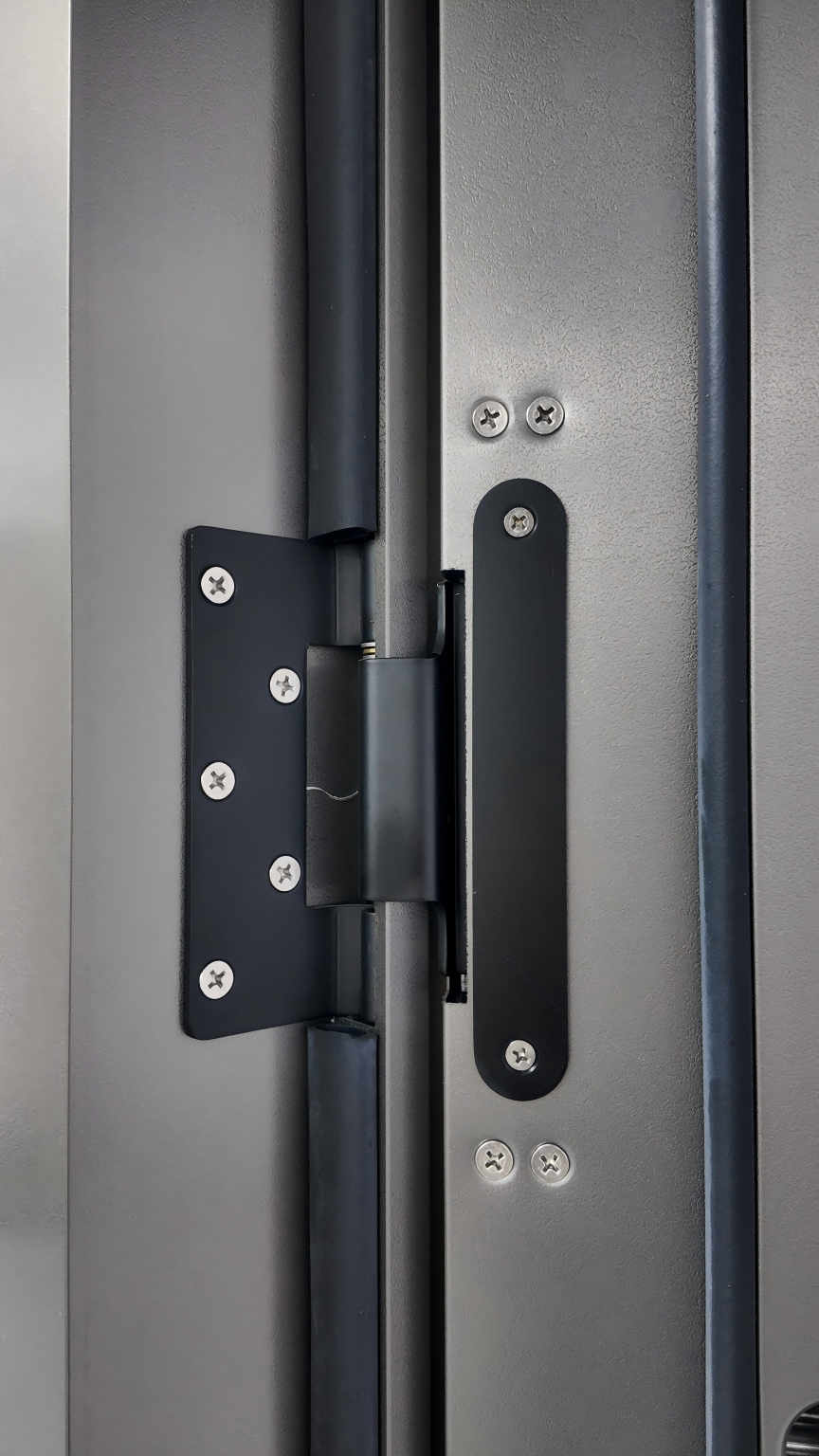
Table of Contents
- Diagnose the Problem Before Adding Shims
- Establish the Hinge Side First
- Hang the Door and Read the Gaps
- Adjust the Lock Side to the Door
- Treat the Head Carefully
- A Practical Troubleshooting Sequence
- Special Considerations for Heavy Metal Doors
- How Manufacturing Accuracy Supports Installation
- Confirm Operation Before Sealing the Frame
Diagnose the Problem Before Adding Shims
Shims correct the frame position. They should not be used to disguise a damaged door leaf, loose hinge, twisted frame or unsuitable wall opening.
Start by operating the door slowly.
Observe where the problem appears:
Top corner rubs the frame
Lock does not enter the strike
Door swings open by itself
Door swings closed by itself
Gap is narrow at one end
Threshold contact is uneven
Weather seal is compressed only in one area
Each symptom points to a different alignment issue.
Establish the Hinge Side First
The hinge jamb controls the vertical rotation axis of the door.
Place the frame in the opening and use a long level to check the hinge side. Insert opposing tapered shims near the upper, middle and lower hinge positions.
The shims should support the frame without twisting it. For a heavy entrance door, unsupported gaps around anchors can allow the frame to move when fasteners are tightened.
Anchor the hinge side progressively. Recheck plumb after each fixing point rather than tightening everything at once.
Hang the Door and Read the Gaps
Once the hinge side is stable, install or close the door and inspect the reveal around the leaf.
The gap should appear consistent along:
Hinge side
Head
Lock side
Threshold
A narrow gap at one corner may indicate a frame that is out of square. A door that swings on its own often points to an out-of-plumb hinge axis.
Adjust the Lock Side to the Door
Shim the latch or lock side after the hinge side has been established.
Align the frame so that:
The latch enters smoothly
Multi-point locks engage without force
Weather seals make consistent contact
The door does not bind
The frame remains straight
Do not pull the frame toward an irregular wall by overtightening the anchor. This can bow the jamb inward.
Treat the Head Carefully
The head frame should be level and maintain a consistent gap above the door.
Do not force the header downward onto the door frame. Structural building loads should be carried by the building opening, not by the entrance-door system.
A Practical Troubleshooting Sequence
When the door still does not operate correctly, follow this order:
Check for loose hinges.
Confirm the hinge jamb is plumb.
Check the head for level.
Compare opening diagonals.
Inspect frame straightness.
Confirm threshold level.
Adjust lock-side shims.
Test the seals.
Tighten anchors gradually.
Test every locking point again.
This sequence prevents repeated random adjustments.
Special Considerations for Heavy Metal Doors
A commercial-grade steel entrance door system can place more load on its hinges and fixing points than a lightweight interior door.
Our commercial steel entry doors use reinforced steel construction for demanding entrance applications. Installation teams should follow the product drawing, anchor specification and local construction requirements.
Oversized doors, pivot doors, armored doors and doors with heavy decorative panels should be handled by experienced installers. Frame movement of only a few millimetres can affect multi-point lock operation.
How Manufacturing Accuracy Supports Installation
Our factory coordinates the door leaf, frame, hinge position, lock preparation and opening direction within one production system. Automated cutting and forming help maintain approved dimensions across customized orders.
However, a correctly manufactured door can still perform poorly in a twisted opening. The factory specification and site preparation must agree before installation.
Confirm Operation Before Sealing the Frame
Operate the door repeatedly, engage all locking points and inspect the perimeter gaps before applying permanent sealant or completing wall finishes.
Send us the door size, frame drawing, wall construction and photographs if an installation issue appears. We can help identify which dimensions should be checked.
Request installation information for a commercial entrance door before fixing a commercial-grade steel entrance door system permanently.
Previous: How To Shim A Door Hinge?