



Security Doors vs. Standard Front Doors: What Is the Difference?
Security Doors vs standard front doors differ mainly in structural protection, lock reinforcement, frame design, hardware capacity, and resistance to forced entry. A standard front door provides access, privacy, weather separation, and decoration. A security front door is designed to perform those functions while adding a stronger protective structure.
The term “security door” should not be based on appearance alone. Heavy styling, a thick-looking panel, or a smart lock does not automatically make an entrance door secure.
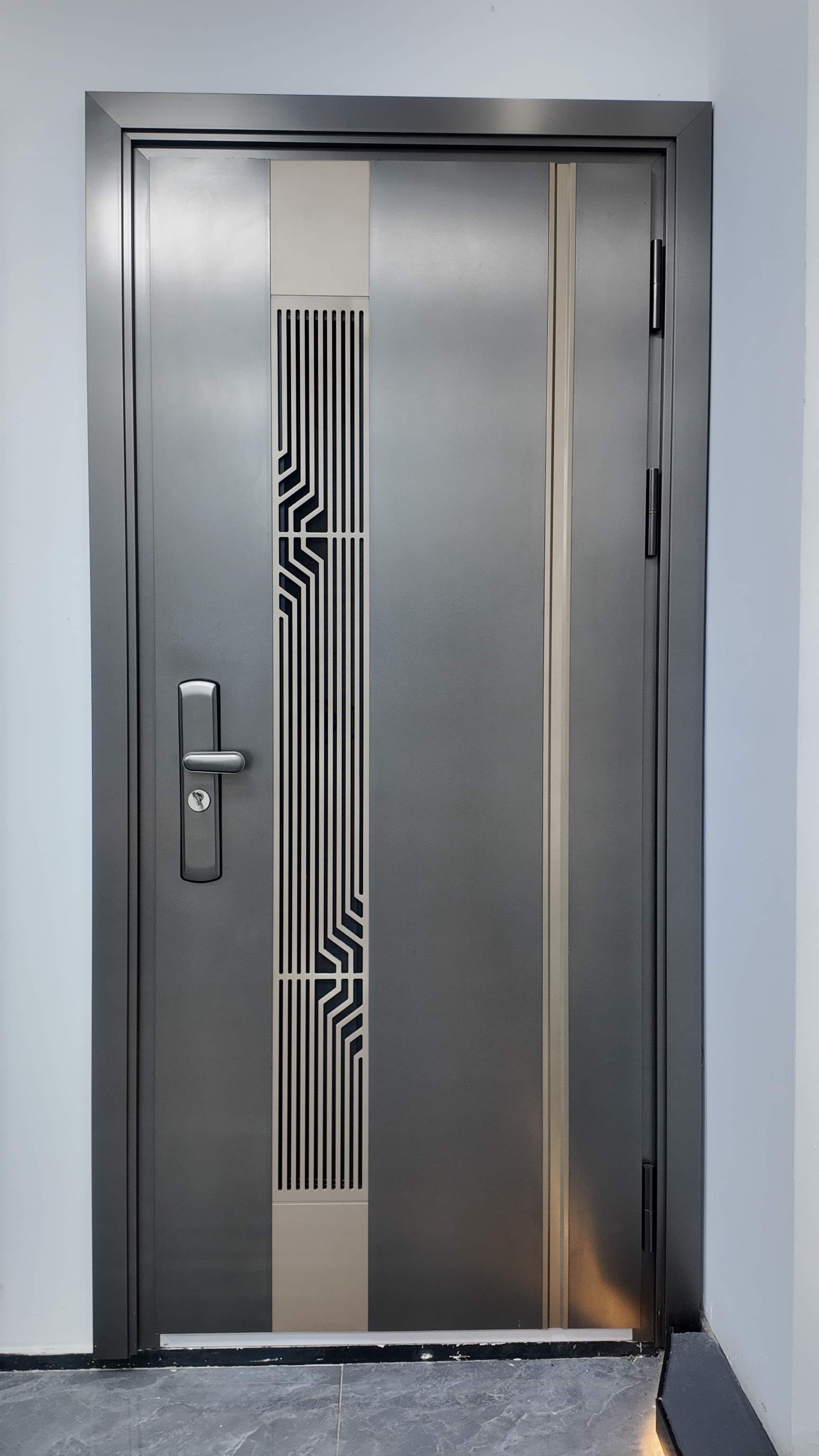
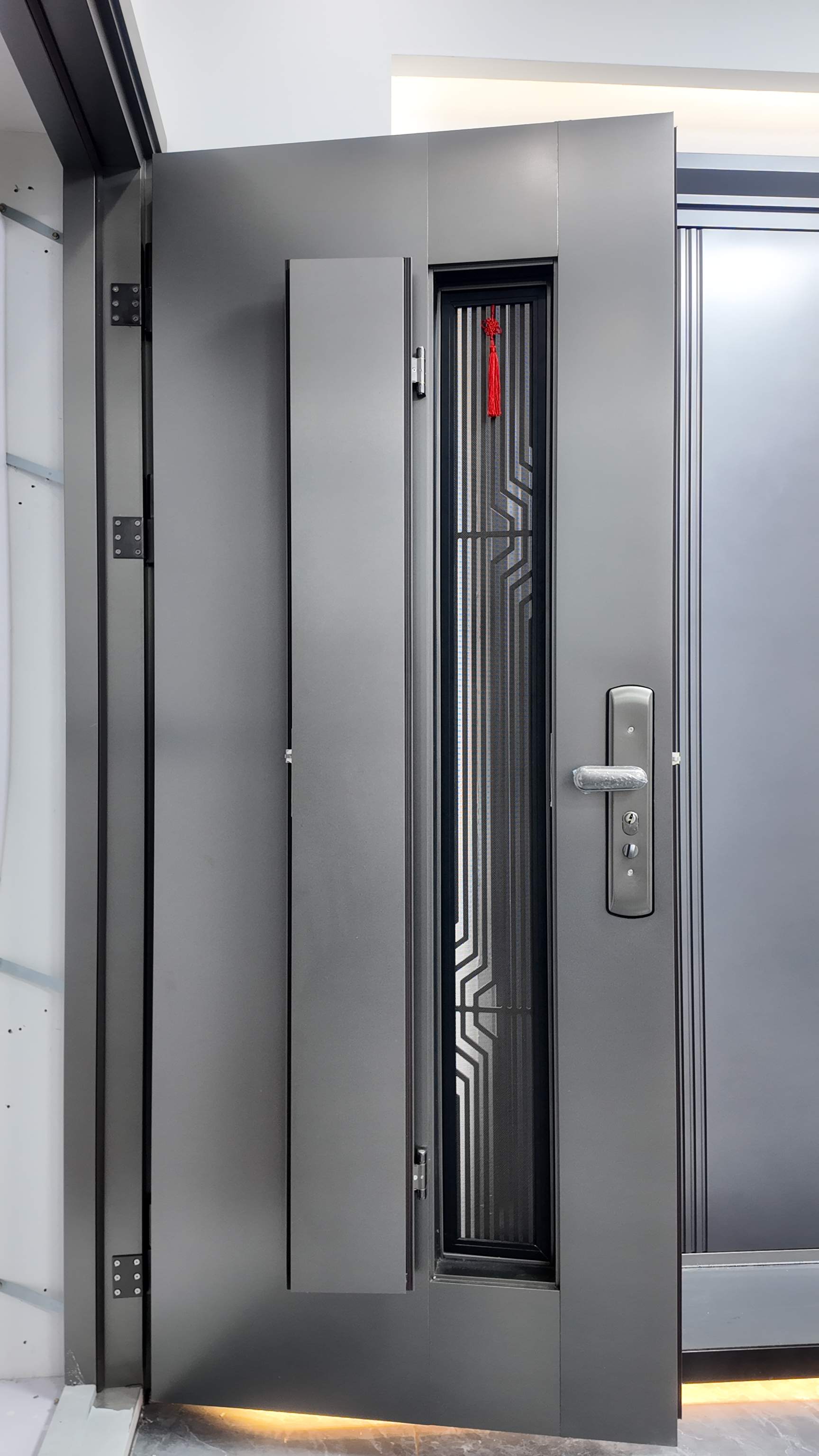
Table of Contents
- Standard Front Door Functions
- What Makes a Security Door Different?
- Do Security Doors Provide Better Weather Protection?
- Security Doors and Appearance
- When Is a Security Door Worth Considering?
- How Our Factory Builds Security Entrance Systems
- Questions to Ask Before Ordering
- The Practical Difference
Standard Front Door Functions
A standard residential front door should:
Open and close reliably
Fit the wall opening
Provide privacy
Support a suitable lock
Reduce air and water penetration
Match the building design
Tolerate regular household use
Depending on material and construction, a standard front door may still provide good security. However, it may not include specialized anti-pry edges, reinforced lock zones, heavy-duty hinges, or a strengthened frame.
Standard doors are suitable for lower-risk entrances, sheltered apartment corridors, internal access points, and homes where another controlled entrance already provides protection.
What Makes a Security Door Different?
Reinforced Door-Leaf Structure
A security door commonly uses a reinforced steel, stainless steel, aluminum, or composite structure. Internal ribs, folded sections, protective plates, and engineered filling can help the leaf resist deformation.
A thick door does not necessarily contain a strong internal structure. Buyers should ask how the leaf is reinforced instead of comparing thickness alone.
Stronger Door Frame
The frame receives force transferred from the door leaf and lock. A weak or poorly fixed frame can fail even when the door panel remains intact.
Security door frames should be coordinated with the wall construction, fixing method, door weight, lock bolts, and hinge positions. Installation fasteners need to engage suitable structural material.
Anti-Pry Protection
The clearance between the door leaf and frame is a critical security area. An interlocking or reinforced lock-side structure can make it more difficult to reach the lock bolts or lever the door away from the frame.
Our steel security front door supports customized designs and finishes while retaining a security-focused metal structure.
Lock and Bolt Engagement
A lock is only as effective as the material supporting it. The lock body, strike area, bolt depth, reinforcement, and alignment should work together.
Smart locks add convenient access methods such as fingerprint or password entry, but electronic features do not replace physical lock and frame strength.
Load-Bearing Hardware
Security doors are often heavier than standard doors. Hinges or pivots must support the door weight while maintaining consistent gaps around the frame.
Adjustable hardware can help installers correct small alignment differences, but it cannot compensate for an incorrectly sized opening or unstable wall structure.
Do Security Doors Provide Better Weather Protection?
Not automatically. Security and weather resistance are related but separate performance areas.
A reinforced security door may still leak air or water when its seals, threshold, drainage, frame joints, or installation are inadequate. Conversely, a well-sealed standard door may provide good weather resistance without being designed for high forced-entry resistance.
Outdoor security doors should combine:
Protective surface treatment
Corrosion-resistant components
Continuous weather seals
Suitable threshold construction
Controlled drainage
Accurate frame installation
Security Doors and Appearance
Modern security doors can use precision-carved aluminum panels, stainless steel textures, embossed steel, concealed hinges, large handles, glass inserts, and customized colors. Protective construction no longer requires a basic industrial appearance.
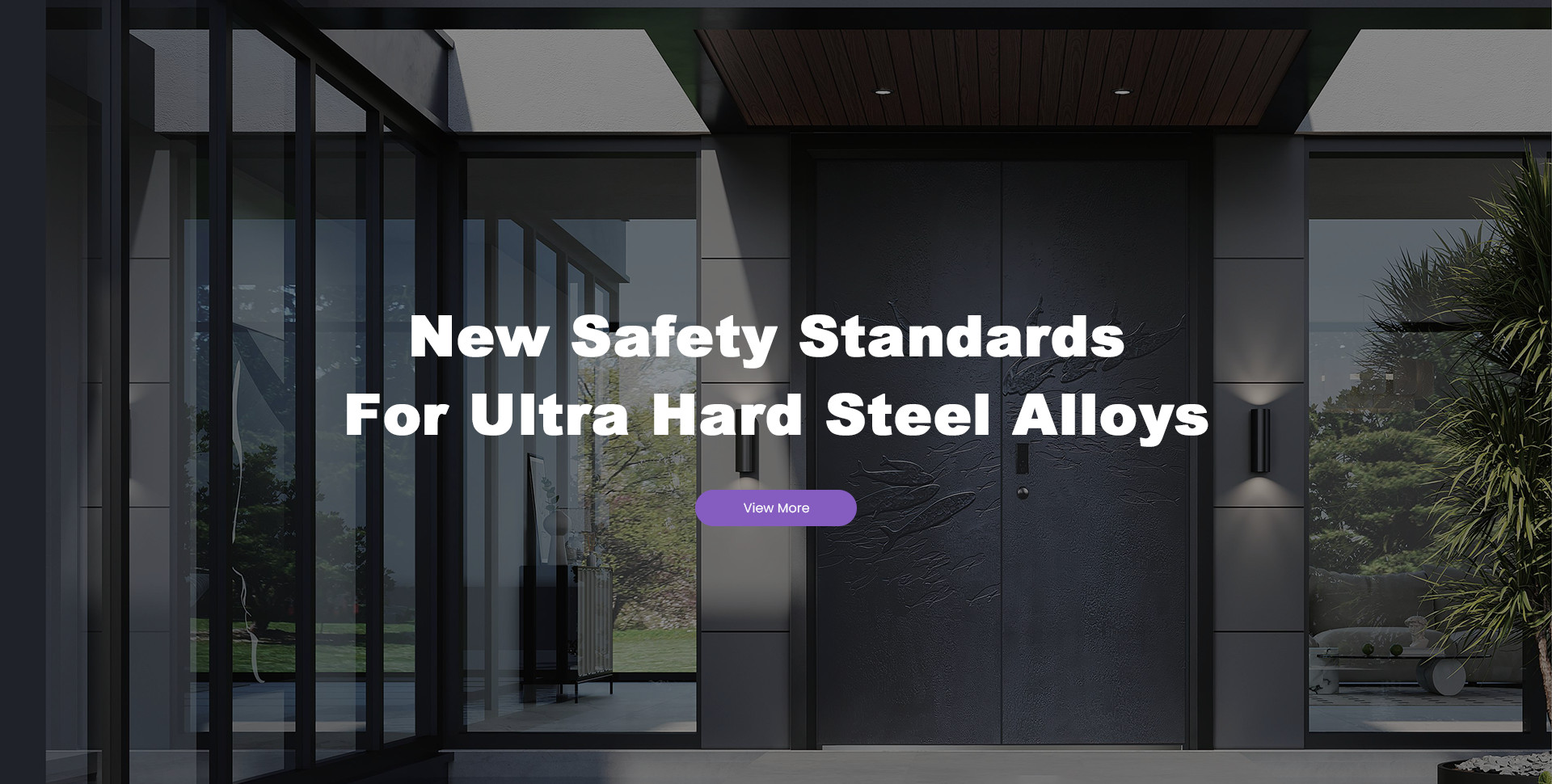
Our high-security front doors use stainless steel structures and support customized panels, colors, frames, and lock configurations for residential entrances.
The decorative panel should not interfere with hinge operation, lock access, drainage, or installation. Any design change must be reviewed together with the door’s weight and structural balance.
When Is a Security Door Worth Considering?
A security entrance door is suitable for:
Detached houses and villas
Ground-floor residential entrances
Properties with direct street access
Remote or periodically unoccupied homes
High-value residential projects
Entrance points requiring stronger access control
Door replacements where the existing frame is weak or damaged
Risk assessment should include the surrounding building. Windows, secondary doors, walls, and access-control practices also affect security. One reinforced door cannot protect a building with multiple weak access points.
How Our Factory Builds Security Entrance Systems
As a heavy-duty commercial security door supplier, we manufacture steel, stainless steel, aluminum, armored, and composite entrance doors for residential developments, villas, showrooms, and other building projects.
Our manufacturing process coordinates the door leaf, frame, reinforcement, hinge position, lock opening, internal filling, decorative panel, and surface finish. Automated cutting and forming equipment support non-standard production, while ERP management connects order planning, production, logistics, and warehousing.
Buyers can specify:
Custom door dimensions
Single or double configuration
Inward or outward opening
Hinged, pivot, or offset-axis operation
Anti-pry structure
Lock and smart-lock preparation
Decorative panels
Metal colors and textures
Glass and sidelight combinations
Handles and hardware
Frame and wall requirements
Project packaging and labeling
Questions to Ask Before Ordering
Ask the supplier how the door leaf is reinforced, how the lock area is protected, and how the frame connects to the wall. Confirm the door weight and hardware capacity. Request drawings of the frame, threshold, opening direction, and lock position.
Project buyers should also clarify whether specific test reports or certifications are required in the destination market. Terms such as security, armored, anti-theft, or explosion-proof may be subject to local standards and should not be treated as interchangeable marketing descriptions.
The Practical Difference
A standard front door is primarily an entrance and environmental barrier. A security door adds a coordinated protective structure intended to resist impact, prying, lock-area attack, and deformation.
The strongest security front door is not simply the heaviest model. It is a balanced system in which the leaf, frame, lock, hinges, wall fixings, and installation are designed to work together. Send the opening dimensions and required security configuration for a manufacturing review before finalizing the entrance schedule.