



Stainless Steel vs. Steel Entrance Doors: Which Lasts Longer?
Stainless steel vs Steel Entrance Doors differ significantly in corrosion behavior, maintenance needs, surface protection, and long-term appearance. A stainless steel entrance door will usually last longer in humid, coastal, or rain-exposed environments because corrosion resistance exists within the alloy itself. A carbon steel entrance door can also provide a long service life when it receives suitable pretreatment, coating, design protection, and regular maintenance.
The answer therefore depends on both the metal and the environment. Stainless steel has a natural advantage against corrosion, while coated steel can offer strong structural performance and cost efficiency in less aggressive conditions.
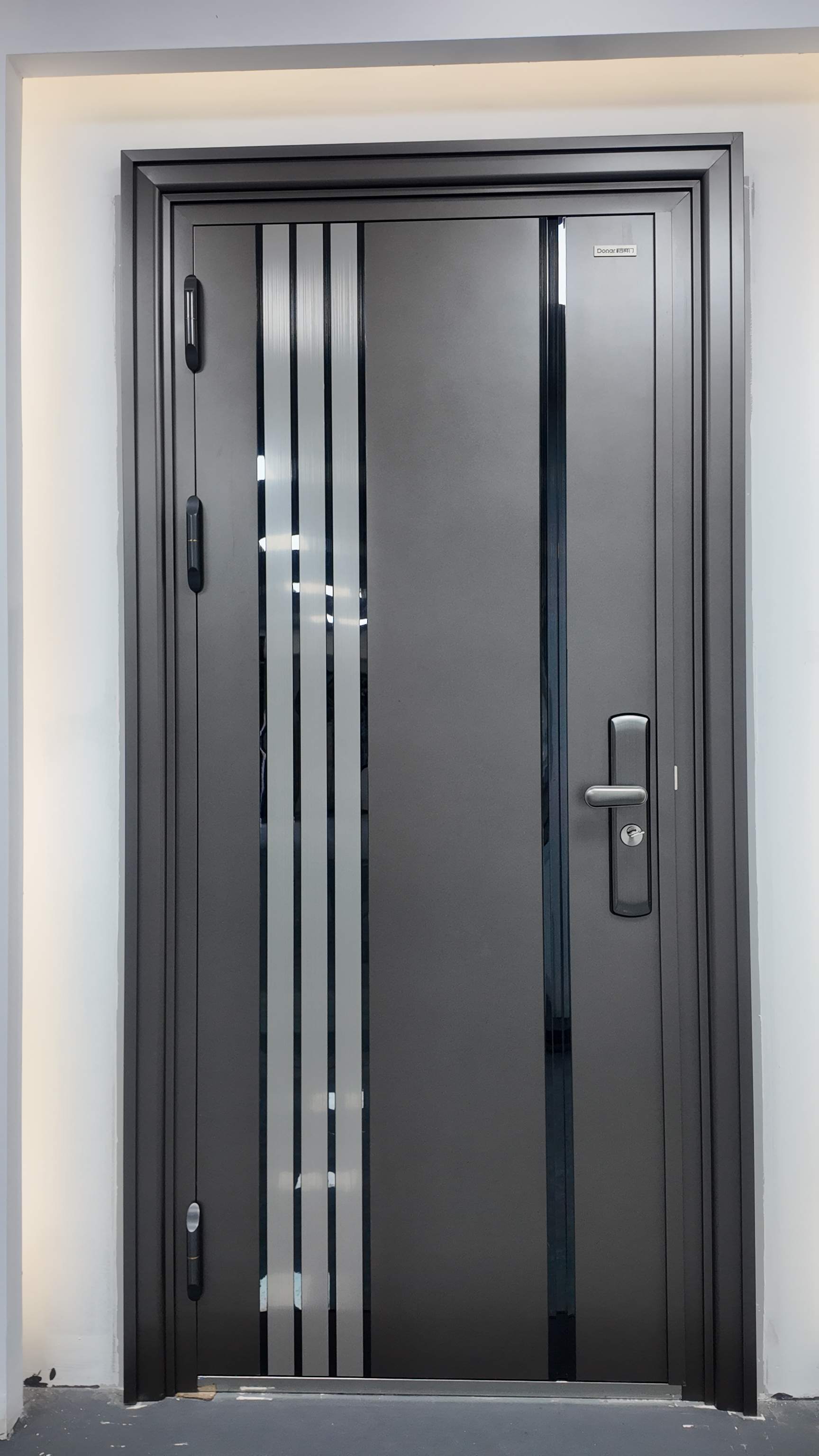
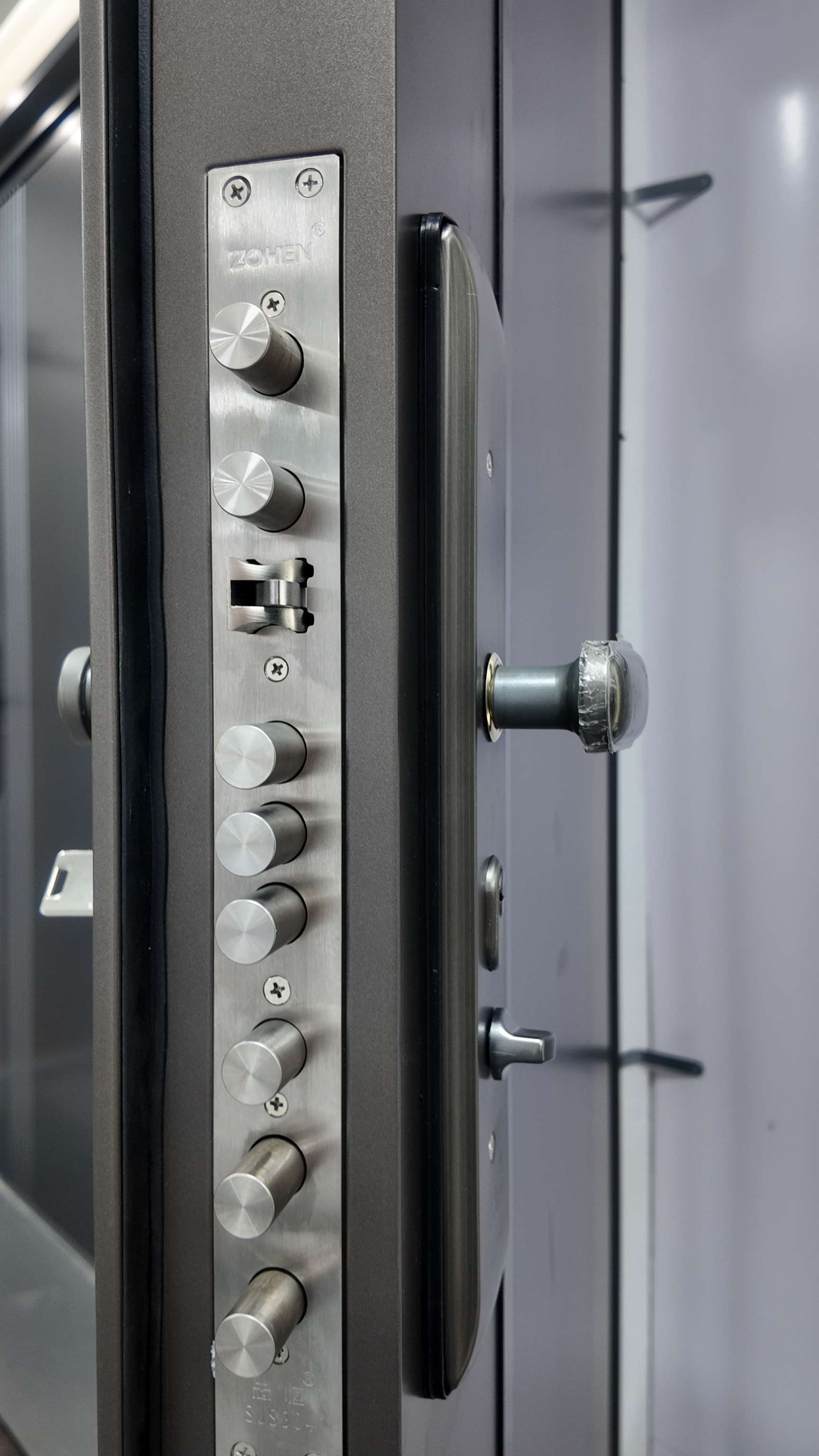
Table of Contents
- Why Stainless Steel Resists Corrosion
- How Carbon Steel Is Protected
- Structural Strength and Security
- Which Material Maintains Its Appearance Longer?
- Maintenance Requirements
- Climate Is the Deciding Factor
- Cost and Lifetime Value
- Manufacturing Control for Long-Term Performance
- Which Entrance Door Lasts Longer?
Why Stainless Steel Resists Corrosion
Stainless steel contains chromium, which forms a thin passive surface layer. When the correct alloy is used and the surface remains in suitable condition, this layer helps protect the underlying metal from continued oxidation.
Grade 304 stainless steel is widely used for exterior architectural products because it offers a useful balance of corrosion resistance, strength, formability, and appearance. Our stainless front door uses 304 stainless steel for residential entrances exposed to humidity, rain, temperature changes, and urban conditions.
Stainless steel is particularly useful for:
Coastal residential areas
Humid and tropical climates
Entrances exposed to frequent rainfall
Buildings requiring repeated cleaning
Projects that want a visible metal finish
Long-term residential replacement programs
However, stainless steel is not completely immune to staining or corrosion. Salt deposits, metallic contamination, harsh chemicals, and poor fabrication practices can damage its surface.
How Carbon Steel Is Protected
Carbon steel is naturally vulnerable to rust when moisture and oxygen reach the metal. Entrance-door manufacturers protect it through cleaning, pretreatment, primers, powder coating, paint systems, decorative cladding, and sealed construction.
A well-coated steel door can perform reliably for many years. Problems usually begin at exposed edges, deep scratches, welds, fastener holes, drainage points, or areas where water remains trapped.
Coating performance depends on:
Surface preparation before painting
Complete coverage around edges and folds
Correct curing
Compatibility between coating layers
Protection during transport and installation
Timely repair of scratches
Drainage and weather shielding
Steel entrance doors are especially practical for sheltered houses, apartment entrances, and projects where reinforced security construction is prioritized.
Structural Strength and Security
Both stainless steel and carbon steel can create strong Security Doors. Material grade alone does not determine forced-entry resistance.
The door needs a coordinated leaf, frame, lock area, anti-pry edge, hinges, internal reinforcement, and wall fixing. Panel thickness should be considered together with folds, ribs, and structural geometry.
Our steel front doors use an interlocking anti-pry structure, reinforced lock system, thick door leaf, and polyurethane filling. This type of construction shows how ordinary steel can remain a practical choice where security and structural rigidity are primary requirements.
Which Material Maintains Its Appearance Longer?
Stainless steel can retain a brushed, embossed, or coated metal appearance with comparatively low corrosion risk. Surface quality still depends on fabrication direction, cleaning method, and exposure.
Coated steel offers a broad range of colors and textures, but visible damage should be repaired before corrosion spreads beneath the finish. Dark colors may also show dust, scratches, or heat-related surface variation more easily in strongly exposed locations.
Stainless steel doors can also receive colored or decorative finishes. Buyers should distinguish between the corrosion resistance of the base material and the durability of the applied color layer.
Maintenance Requirements
Stainless Steel Door Maintenance
Remove dirt and salt with clean water and a mild compatible cleaner. Wipe in the direction of a brushed finish and use soft materials that do not leave carbon-steel particles.
Avoid chloride-rich cleaners, harsh acids, abrasive steel wool, and unknown chemicals. Inspect joints, hinges, locks, drainage areas, and seals periodically.
Coated Steel Door Maintenance
Wash the surface gently and inspect for scratches, chips, blistering, or rust staining. Damaged areas should be treated with a compatible repair system before corrosion spreads.
Keep the lower frame and threshold free from debris so water can drain. Do not allow adhesive, cement residue, or installation chemicals to remain on the finish.
Climate Is the Deciding Factor
A sheltered steel door in a dry region may remain in good condition for a long time. The same construction installed beside the sea may require greater coating protection and more maintenance.
A 304 stainless steel entrance door generally offers a safer material basis in high humidity. More aggressive coastal or industrial environments may require a project-specific review of stainless grade, finish, hardware, and maintenance.
The door frame and fasteners should receive equal attention. A stainless steel panel attached to incompatible or poorly protected components can still develop staining, galvanic interaction, or connection problems.
Cost and Lifetime Value
Stainless steel entrance doors normally have a higher initial material cost than basic carbon steel doors. Their corrosion resistance can reduce repainting and surface-repair demands in difficult climates.
Steel doors can offer lower initial cost and strong security performance, particularly for large residential programs. Their lifetime value depends on coating quality, environmental exposure, and whether damaged finishes are repaired promptly.
Compare total ownership factors:
Initial door price
Expected maintenance
Finish repair
Replacement risk
Coastal or industrial exposure
Required security structure
Hardware replacement
Installation and transport cost
Manufacturing Control for Long-Term Performance
As a stainless steel entrance door bulk supply manufacturer, we coordinate material selection, cutting, forming, surface processing, frame production, hinge positioning, lock preparation, assembly, inspection, and protective packaging.
Our entrance-door range includes stainless steel, steel, aluminum, armored, pivot, offset-axis, and cast-aluminum models. OEM and ODM services support customized dimensions, panel patterns, colors, frame structures, opening directions, handles, glass, and locking systems.
For repeat project orders, ERP-managed production helps maintain consistent drawings, specifications, component schedules, and delivery planning. Buyers should provide the installation climate and exposure conditions so material and finish recommendations can be matched to the actual building.
Which Entrance Door Lasts Longer?
Stainless steel usually lasts longer where corrosion is the main threat. It is the stronger choice for humid, coastal, rain-exposed, or frequently cleaned entrances.
Coated carbon steel can last for many years in sheltered or moderate environments and provides excellent structural value when its surface system is properly produced and maintained.
Longevity ultimately depends on four factors: base material, protective finish, entrance exposure, and maintenance. Select stainless steel when corrosion resistance justifies the higher material investment; select coated steel when security, rigidity, and controlled cost are the leading priorities.