



Steel vs. Aluminium Security Doors - Which Is Better?
Steel and aluminum Security Doors are both used for residential, commercial, and architectural entrances, but they offer different advantages. Steel is generally associated with higher rigidity, heavier construction, and strong impact resistance. Aluminum is valued for lower weight, corrosion resistance, and design flexibility.
The better material depends on the building type, door size, security requirements, climate, hardware, installation conditions, and product positioning.
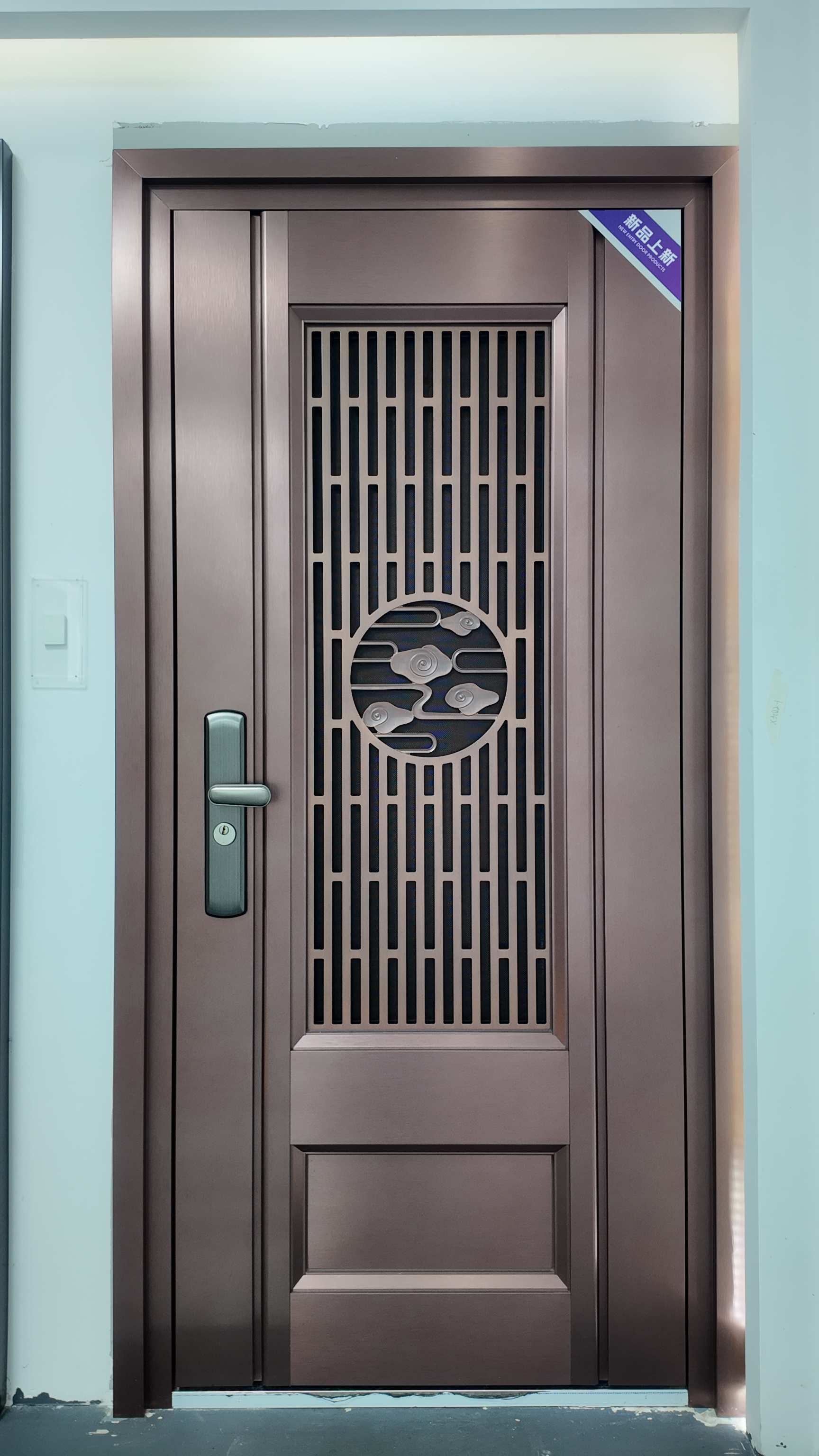
Table of Contents
Steel Security Doors
Steel provides a strong and rigid structure for security doors. It is widely used for residential entrance doors, villas, apartment buildings, commercial properties, and heavy-duty applications.
Steel doors may be suitable when buyers prioritize:
High structural rigidity
Strong impact resistance
A solid and substantial feel
Heavy-duty commercial use
Reinforced internal construction
Stable performance for larger doors
Strong resistance to forced movement
However, steel is heavier than aluminum. The door frame, hinges, handles, locks, and installation method must be selected to support the complete door weight.
Steel also requires appropriate surface treatment. Without effective protection, moisture, salt air, and long-term outdoor exposure may lead to corrosion.
Aluminum Security Doors
Aluminum is a lightweight metal used in modern front doors, residential entrances, villas, apartments, and commercial buildings. It can provide a good strength-to-weight ratio when the profile, thickness, reinforcement, and hardware are correctly designed.
Aluminum doors may be preferred for:
Lower installation weight
Easier transportation
Modern architectural styles
Strong corrosion resistance
Slimmer visual profiles
Flexible surface finishes
Reduced load on hinges
Projects in humid environments
Aluminum does not automatically mean lower security. A well-designed aluminum door can include reinforced profiles, strong locks, suitable hinges, and secure wall fixing.
Strength Is More Than Material
The final performance of a security door depends on the complete construction. Buyers should examine:
Door leaf thickness
Internal reinforcement
Frame profile
Hinge structure
Locking points
Door-to-frame connection
Wall fixing
Surface treatment
Hardware quality
A thick steel panel with a weak frame may not provide the expected performance. Similarly, a lightweight aluminum door with a properly engineered structure may be suitable for many residential and commercial applications.
Corrosion and Weather Exposure
Steel doors need protective coating or other surface treatment, especially when installed in coastal, humid, or rainy environments. The edges, welds, frame joints, hinges, and fasteners also require attention.
Aluminum usually provides stronger natural corrosion resistance, making it attractive for outdoor entrances. However, the complete door system still includes locks, hinges, handles, and fasteners that may use other metals.
For exterior projects, buyers should discuss:
Climate conditions
Coastal exposure
Rain and drainage
Sunlight
Cleaning frequency
Surface color
Coating durability
Hardware material
Weight and Installation
Steel doors are usually heavier and may require more careful handling during transportation and installation. Strong hinges and a stable frame are essential for long-term alignment.
Aluminum doors are lighter, which may simplify installation and reduce stress on hinges. This can be useful for large residential projects, apartment developments, and buildings where installation time is a major consideration.
The lower weight of aluminum may also affect container loading and labor arrangements during international projects.
Design and Market Positioning
Steel doors can support a wide range of finishes, including metallic colors, wood-look textures, brushed effects, embossed designs, and decorative panels. They are suitable for both traditional and modern architectural styles.
Aluminum doors are often selected for clean lines, contemporary profiles, and lighter visual proportions. They can also be finished in various colors and textures for different housing and commercial projects.
Our aluminum front door products include customizable designs for residential and architectural applications.
Which Material Is Better for Homes?
Steel may be preferable for a main entrance where the buyer wants a solid structure and stronger impact resistance. Aluminum may be more suitable for a modern villa, apartment, or residential development where lightweight installation and corrosion resistance are important.
The selection should also consider:
Door opening size
Wall structure
Local weather
Hardware system
Privacy requirements
Glass or panel area
Expected opening frequency
Design style
Which Material Is Better for Commercial Projects?
Commercial projects often include several entrance types. A hotel may require luxury doors for guest areas, stainless steel doors for service areas, and reinforced steel doors for storage or security zones.
A Commercial Grade security door supplier should be able to provide different materials and structures for different areas instead of applying one construction to the entire project.
For a Bulk Order of steel and aluminum doors, buyers should confirm:
Material by model
Door and frame dimensions
Surface finish
Lock and hinge system
Opening direction
Packaging design
Quantity by location
Delivery batches
Installation details
Replacement hardware
OEM and ODM Manufacturing
An OEM ODM Manufacturer of security doors can customize the door according to project requirements or a distributor’s product range.
Customization may include:
Door leaf dimensions
Frame profile
Internal reinforcement
Decorative surface
Color and texture
Glass panel
Lock configuration
Handle style
Hinge position
Private-label packaging
We provide finished and semi-finished production services for brand owners, contractors, developers, and distributors. Our factory uses laser and CNC automation, ERP production management, and 100% testing before shipment.
Conclusion
Steel security doors are generally suitable for heavier, more rigid, and heavy-duty applications. Aluminum security doors are often preferred for lighter installation, corrosion resistance, and contemporary architectural designs.
The correct decision depends on the complete entrance system rather than material weight alone. Buyers can send door dimensions, application details, climate conditions, preferred finish, and target quantity through our quotation page.