




How To Soundproof A Door?
A door can be soundproofed by sealing the gaps around its frame, improving the bottom seal, tightening loose hardware, and increasing the mass of the door leaf. The best result comes from treating the door, frame, threshold, seals, and wall junction as one complete entrance system.
Most sound leakage does not pass directly through a solid panel. It travels through small openings around the perimeter, beneath the door, through lock cutouts, or between the frame and wall.
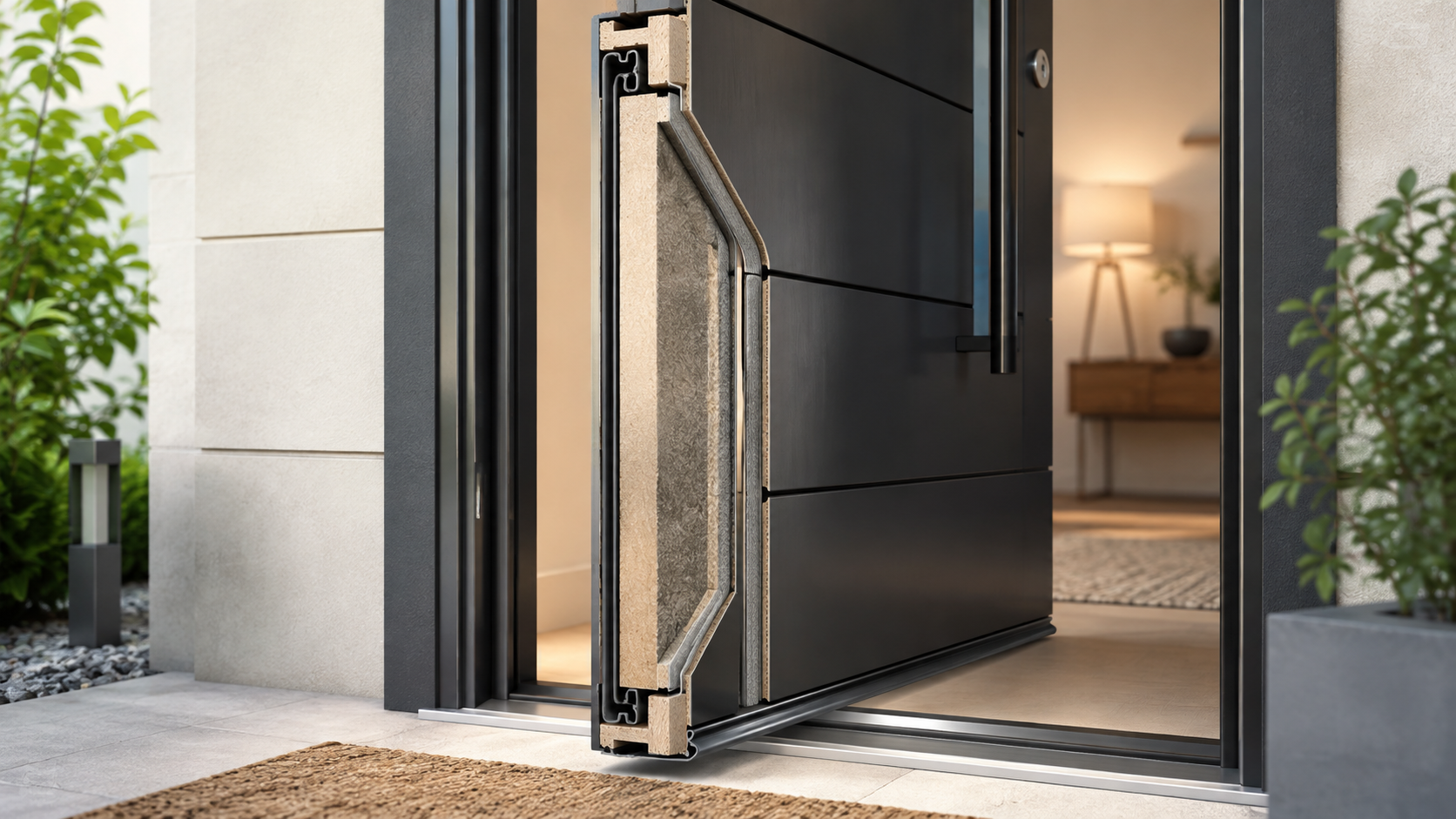
Table of Contents
- Find the Main Sound Leaks First
- Seal the Door Perimeter
- Improve the Bottom of the Door
- Add Mass Where the Door Leaf Is Too Light
- Check the Frame and Hardware
- Treat Glass and Openings Carefully
- What Soundproofing Cannot Fix
- Manufacturing a Quieter Entrance Door
- Request an Acoustic Entrance Door Proposal
Find the Main Sound Leaks First
Close the door and listen from several positions.
Pay attention to:
The head of the frame
Both vertical jambs
The threshold
The latch area
Hinge-side gaps
Glass inserts
Mail slots
Ventilation openings
The wall-to-frame joint
A simple light test can help locate visible gaps. Perform it safely with one person on each side of the door. When light passes through the perimeter, sound and air can usually pass through the same opening.
Do not assume that a thick door is already acoustically effective. A heavy door with an uneven frame may perform worse than a lighter door with continuous compression seals.
Seal the Door Perimeter
Compression weather stripping is one of the most effective first improvements.
The seal should make continuous contact with the door leaf when it closes. It must compress enough to block air movement without creating so much resistance that the latch cannot engage.
Common sealing materials include:
EPDM rubber
Silicone
TPE
Foam tape
Magnetic seals
Kerf-in compression gaskets
Soft foam is inexpensive and easy to install, but it may flatten more quickly under frequent use. Rubber and silicone profiles generally provide more controlled rebound for exterior and high-use doors.
Clean the jamb before applying an adhesive seal. Oil, dust, moisture, and loose paint reduce adhesion.
At the corners, cut the strips accurately so they meet without leaving open joints.
Improve the Bottom of the Door
The gap below the door is often the largest sound path.
Possible solutions include:
Surface-mounted door sweep
Automatic drop seal
Compression threshold seal
Brush seal
Adjustable threshold
Door-bottom gasket
A brush sweep reduces drafts and some high-frequency noise, but it does not create the same airtight contact as a compression or automatic drop seal.
An automatic drop seal lowers when the door closes and retracts when it opens. This can provide good acoustic performance without dragging continuously across the floor.
The bottom seal must remain compatible with the finished floor, threshold height, drainage, fire requirements, and accessibility rules.
Add Mass Where the Door Leaf Is Too Light
Hollow interior doors provide limited sound reduction because their panels are thin and their internal structure contains large air spaces.
Replacing a hollow door with a solid-core, steel, stainless steel, aluminum-system, or armored entrance door can improve the basic sound barrier.
Additional surface panels may add mass to selected interior doors, but they also increase:
Hinge load
Closing force
Frame stress
Door thickness
Lock alignment requirements
Do not attach heavy materials to an entrance door without checking the hinge capacity and frame structure.
For exterior or security applications, replacement with an engineered multi-layer door is usually more reliable than applying improvised material to an unsuitable leaf.
Check the Frame and Hardware
A door that does not close evenly cannot maintain continuous seal compression.
Inspect the hinge screws, latch position, frame alignment, and closing action. Correct these problems before adding thicker weather stripping.
| Problem Area | Typical Sign | Practical Direction |
|---|---|---|
| Hinge side | Uneven vertical gap | Tighten or realign hinges |
| Latch side | Door rebounds before latching | Reduce excessive seal pressure or align strike |
| Door bottom | Light or airflow below leaf | Add suitable sweep or drop seal |
| Frame corners | Small open joints | Join seals accurately |
| Wall junction | Sound around the complete frame | Seal the frame-to-wall gap |
| Door panel | Noise passes through despite tight seals | Consider a denser replacement door |
Loose lock bodies and handles can also create small air paths. Hardware preparation should remain accurate so the lock operates without requiring oversized cutouts.
Treat Glass and Openings Carefully
Glass panels, viewers, vents, and mail slots can reduce acoustic performance.
Single glazing may transmit more noise than a multi-layer door panel. Laminated or insulated glass can be considered when the architectural design requires glazing.
Every glass insert needs stable perimeter sealing.
Mail slots and ventilation openings are difficult to soundproof because they must remain functional. A sealed external delivery box or alternative ventilation route may provide a better solution than trying to block the opening temporarily.
Never obstruct a legally required fire, ventilation, or emergency component.
What Soundproofing Cannot Fix
Weather stripping cannot compensate for:
A bent door leaf
A severely twisted frame
Loose wall anchors
Large structural cracks
An undersized door
An unsealed threshold cavity
Failed glazing
A damaged multipoint lock
Poor wall sound insulation
Sound may also travel through ceilings, floors, side walls, ducts, and windows. The door should be assessed as part of the complete room.
Manufacturing a Quieter Entrance Door
Our factory has focused on non-standard customized entrance doors since 1979. We produce aluminum-system doors, stainless Steel Entrance Doors, armored doors, painted steel doors, pivot doors, and cast-aluminum Security Doors.
As a soundproof steel entrance door wholesale supplier, we can coordinate the door leaf, filling structure, frame depth, sealing strip, threshold, hinge, lock body, and opening direction before production.
Our manufacturing support includes:
Customized door dimensions
Multi-layer panel structures
High-density internal filling
Automotive-grade sealing directions
Stainless steel and aluminum frames
Multipoint locking preparation
Laser and CNC machining
Surface finish customization
ERP-controlled production and packing
Project labels and export protection
Selected entrance-door structures on our website are designed around multi-layer construction and perimeter sealing, with model-specific sound-reduction data confirmed separately.
Request an Acoustic Entrance Door Proposal
Send us the wall opening, door size, noise source, required opening direction, threshold condition, lock type, finish, quantity, and destination market.
Our technical team can review the full entrance structure and prepare a quotation covering drawings, seal configuration, samples, OEM/ODM development, production inspection, hardware preparation, and export delivery.
Previous: How To Adjust Door Closer?