



How To Fix A Hole in A Door?
A small cosmetic hole in a wooden or hollow-core interior door can often be patched, sanded, primed, and painted. A hole in a steel, aluminum, fire-rated, security, or exterior entrance door needs more careful assessment because the damage may affect strength, weather resistance, insulation, or lock performance.
The correct repair depends on the door material, hole size, location, internal structure, and required finish.
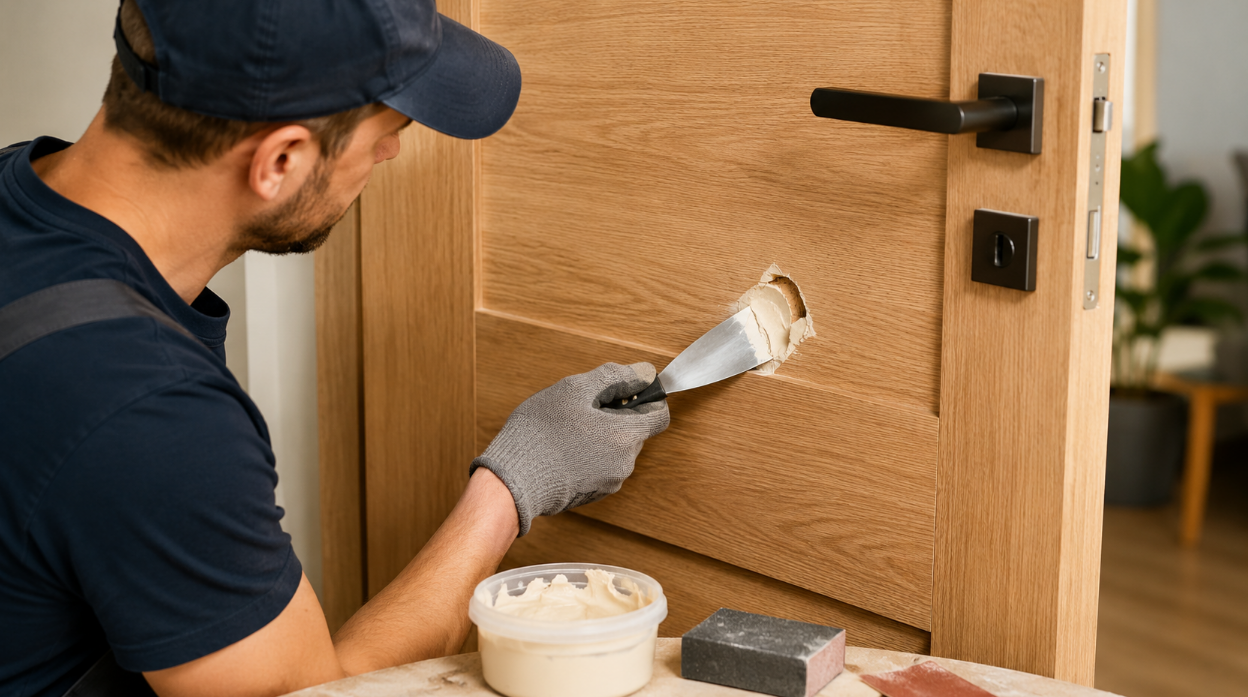
Table of Contents
- Classify the Damage Before Repairing It
- Repairing a Small Hole in a Hollow-Core Door
- Repairing Solid Wood and Engineered Wood Doors
- What About a Hole in a Steel Door?
- Holes Near Locks, Hinges, and Frames
- Repair or Replace?
- Matching the Finish After Repair
- Replacement Supply for Damaged Entrance Doors
- Request a Repair-or-Replacement Assessment
Classify the Damage Before Repairing It
Not every hole is only a surface problem.
Check whether the damage is:
A shallow dent
A screw hole
A puncture through one skin
A hole through both sides
Corrosion damage
Impact near a hinge
Damage near the lock
A crack around glazing
A torn metal panel
A failed decorative insert
A small hole in the center of a painted interior door may be repairable. The same size hole beside a deadbolt or hinge can compromise the load-bearing area.
Fire-rated and certified Security Doors should be inspected by an authorized specialist. An unapproved filler or patch can invalidate the intended performance.
Repairing a Small Hole in a Hollow-Core Door
Hollow-core doors usually have thin outer skins supported by a lightweight internal structure.
Begin by removing loose fragments around the hole. Create a stable edge without making the opening unnecessarily large.
A typical repair may involve:
Supporting the cavity behind the damaged skin
Filling the opening with a suitable low-expansion backing
Allowing the backing to cure
Applying a compatible surface filler
Sanding the area level
Priming the repair
Repainting the complete section
Do not overfill the cavity with high-expansion foam. Excess pressure can distort the thin door skin.
A large hole or widespread delamination may make replacement more economical than patching.
Repairing Solid Wood and Engineered Wood Doors
Small screw holes and shallow damage can be filled with a wood-compatible repair material.
For deeper holes, a fitted wood plug or patch may provide better support than a thick layer of filler.
Match the grain direction where the door will receive a transparent stain. A painted finish is more forgiving because the repair can be primed and covered.
Engineered wood requires special care. Sanding through a thin veneer exposes the core and creates a visible color difference.
Do not repair a swollen, water-damaged edge without first correcting the leak or moisture source.
What About a Hole in a Steel Door?
A metal door may contain several layers:
Exterior steel or stainless steel skin
Internal reinforcement
Insulation or filling material
Lock reinforcement
Decorative panels
Inner metal skin
Surface coating
A puncture can expose the filling and allow water to enter the internal structure.
For a small non-structural hole, a professional repair may include cleaning, corrosion treatment, metal backing, welding or approved filler, surface leveling, primer, and refinishing.
Welding must be completed carefully. Excessive heat can deform the panel, damage internal materials, discolor stainless steel, or affect the opposite surface.
DIY body filler may hide the opening temporarily but does not automatically restore security or weather performance.
Holes Near Locks, Hinges, and Frames
Damage in a hardware zone is more serious because these areas carry concentrated loads.
Do not rely on filler when the hole involves:
Hinge screws
Closer mounting
Lock-body opening
Cylinder area
Multipoint bolts
Strike reinforcement
Frame anchors
Pivot hardware
A reinforcement plate, replacement panel, new frame component, or complete door may be required.
For high-security doors, the visible skin is only one part of the protective structure. Repair decisions should consider the internal reinforcement and lock engagement.
Repair or Replace?
Repair may be reasonable when:
The damage is small
The structure remains stable
The door still closes correctly
No water has entered
The finish can be matched
The hole is away from hardware
No certification is affected
Replacement is usually more appropriate when:
The door is severely bent
Corrosion has spread
Internal filling is wet
The lock area is torn
The hinge zone is cracked
The panel cannot remain flat
Weather sealing is lost
The door is fire-rated or security-critical
Repair cost approaches replacement cost
A damaged exterior entrance door should be assessed from both sides and around the complete frame.
Matching the Finish After Repair
Metallic, wood-grain, brushed, fluorocarbon-painted, and textured finishes can be difficult to match locally.
A small spot repair may remain visible because of differences in:
Color
Gloss
Grain
Brushing direction
Texture
Aging
UV exposure
Refinishing a complete decorative panel may create a more consistent appearance than painting only the patched area.
For a customized entrance project, keeping the original color code, panel drawing, and production record simplifies future replacement.
Replacement Supply for Damaged Entrance Doors
As a replacement stainless Steel Entrance Door bulk supplier, we support distributors, contractors, property managers, renovation companies, villa projects, apartment projects, and commercial buildings.
Our factory can manufacture replacement doors according to an existing opening, drawing, photograph, or approved sample.
Available directions include:
304 stainless steel door structures
Steel entrance doors
Aluminum-system doors
Armored doors
Pivot and offset-axis doors
Customized decorative panels
Existing-frame measurement review
Lock and hinge preparation
Color and surface matching
Protective export packaging
Automated cutting, forming, laser processing, and ERP-controlled production help maintain consistency across repeated replacement orders.
Request a Repair-or-Replacement Assessment
Provide clear photographs of the damage, door dimensions, material, frame condition, lock type, opening direction, finish, and required quantity.
Our team can review whether a replacement leaf, coordinated frame set, decorative panel, or complete customized entrance door is the more practical option and prepare a detailed quotation.